
Duas.org recommends downloading and Installing these fonts to view the content on this page: NAJAF | VERDANA TRANSLITERATION
Dua 'During' Salaat PDF Click here for BEFORE Salaat
|
Duas.org recommends downloading and Installing these fonts to view the content on this page: NAJAF | VERDANA TRANSLITERATION Dua 'During' Salaat PDF Click here for BEFORE Salaat |
Before you begin with the recitation (qir�'ah: reciting certain Qur'�nic chapters in the prayers), you may say the statement of seeking protection (isti`�dhah) in a low tone:
|
اعُوذُ بِٱللَّهِ مِنَ ٱلشَّيْطَانِ ٱلرَّجِيمِ |
a`�dhu bill�hi min alshshay��ni alrraj�mi |
I pray Allah�s protection from Satan, the accursed. |
You may then recite S�rah al-F�ti�ah (No. 1) observing all etiquettes, having your heart present, and pondering while that is as much as one breath. Then, you may recite any S�rah of the Holy Qur'�n, although it is advisable to recite such S�rahs as S�rah al-Naba' (No. 78), S�rah al-Ins�n (or al-Dahr, No. 76), or S�rah al-Qiy�mah (No. 75).
Upon finishing reciting the second S�rah, you may also pause for a while that is as much as one breath. You may then raise your hands up to the lower part of your ears while uttering the Takb�r statement. You may then genuflect, putting your right hand on your right knee and then your left hand on your left knee, opening up your fingers as if you are holding fast to your knees. You may also bow your back and stretch your neck at the level of your back, casting your sight on the space between your two feet and saying the following:
|
سُبْحَانَ رَبِّيَ ٱلْعَظِيمِ وَبِحَمْدِهِ |
sub��na rabbiya al`a��mi wa bi�amdih� |
All glory be to my Lord, the All-great, and in praise of Him. |
It is highly advisable to repeat this statement seven, five, or three times. Before that, you may have said the following:
|
اللَّهُمَّ لَكَ رَكَعْتُ |
all�humma laka raka`tu |
O Allah, to You alone have I genuflected, |
|
وَلَكَ اسْلَمْتُ |
wa laka aslamtu |
to You alone have I submitted, |
|
وَبِكَ آمَنْتُ |
wa bika �mantu |
in You have I believed, |
|
وَعَلَيْكَ تَوَكَّلْتُ |
wa `alayka tawakkaltu |
and in You have I put my trust. |
|
وَانْتَ رَبِّي |
wa anta rabb� |
And You are my Lord. |
|
خَشَعَ لَكَ سَمْعِي وَبَصَرِي |
khasha`a laka sam`� wa ba�ar� |
Revering to You are my hearing, my sight, |
|
وَشَعْرِي وَبَشَرِي |
wa sha`r� wa bashar� |
my hair, my skin, |
|
وَلَحْمِي وَدَمِي |
wa la�m� wa dam� |
my flesh, my blood, |
|
وَمُخِّي وَعَصَبِي وَعِظَامِي |
wa mukhkh� wa `a�ab� wa `i��m� |
my brain, my nerve, my bones, |
|
وَمَا اقَلَّتْهُ قَدَمَايَ |
wa m� aqallat-hu qadam�ya |
and whatever is borne by my two feet. |
|
غَيْرَ مُسْتَنْكِفٍ وَلاَ مُسْتَكْبِرٍ وَلاَ مُسْتَحْسِرٍ |
ghayra mustankifin wa l� mustakbirin wa l� musta�sirin |
I am neither disdaining, nor arrogant, nor regretful. |
You may now raise your head from genuflection, stand erect, and say the following:
|
سَمِعَ ٱللَّهُ لِمَنْ حَمِدَهُ |
sami`a all�hu liman �amidah� |
May Allah listen to him who praises Him. |
You may then utter a Takb�r statement and fall down for prostration with full submission and reverence. You may stretch your palms and put them on the ground before you put your knees on the ground. You may prostrate on a prostration-clay made of the soil taken from Imam al-�usayn�s tomb. While prostrating yourself, you should utter the statement of prostration once although it is favorable to repeat it seven, five, or three times. Before that, you may have said the following:
|
اللَّهُمَّ لَكَ سَجَدْتُ |
all�humma laka sajadtu |
O Allah, to You (alone) do I prostrate, |
|
وَبِكَ آمَنْتُ |
wa bika �mantu |
in You do I have faith, |
|
وَلَكَ اسْلَمْتُ |
wa laka aslamtu |
to You do I submit, |
|
وَعَلَيْكَ تَوَكَّلْتُ |
wa `alayka tawakkaltu |
in You do I put trust, |
|
وَانْتَ رَبِّي |
wa anta rabb� |
and You are my Lord. |
|
سَجَدَ وَجْهِي لِلَّذِي خَلَقَهُ |
sajada wajh� lill�dh� khalaqah� |
My face is prostrating the One Who has created it |
|
وَشَقَّ سَمْعَهُ وَبَصَرَهُ |
wa shaqqa sam`ah� wa ba�arah� |
and split its hearing and sight. |
|
الْحَمْدُ لِلَّهِ رَبِّ ٱلْعَالَمِينَ |
al�amdu lill�hi rabbi al`�lam�na |
All praise be to Allah, the Lord of the Worlds. |
|
تَبَارَكَ ٱللَّهُ احْسَنُ ٱلْخَالِقِينَ |
tab�raka all�hu a�sanu alkh�liq�na |
Blessed be Allah, the most excellent of all creators. |
You may now say the prostration statement. Then, you may raise your head from the position of prostration and sit down. While doing this, it is recommended to utter the Takb�r statement and to sit on your hip, saying the following:
|
اسْتَغْفِرُ ٱللَّهَ رَبِّي وَاتُوبُ إِلَيْهِ |
astaghfiru all�hu rabb� wa at�bu ilayhi |
I implore Allah, my Lord, for forgiveness and I repent to Him. |
You may also say the following:
|
اللَّهُمَّ ٱغْفِرْ لِي وَٱرْحَمْنِي |
all�humma ighfir l� war�amn� |
O Allah, (please) forgive me, have mercy upon me, |
|
وَٱجْبُرْنِي وَٱدْفَعْ عَنِّي وَعَافِنِي |
wajburn� wadfa` `ann� wa `�fin� |
set aright my affairs, defend me, and grant me wellbeing. |
|
إِنِّي لِمَا انْزَلْتَ إِلَيَّ مِنْ خَيْرٍ فَقِيرٌ |
inn� lim� anzalta ilyya min khayrin faq�run |
Surely, I stand in need of whatever good You may send down to me. |
|
تَبَارَكَ ٱللَّهُ رَبُّ ٱلْعَالَمِينَ |
tab�raka all�hu rabbu al`�lam�na |
Blessed be Allah, the Lord of the Worlds. |
You may then say Takb�r and prostrate again, doing the same as what you have done in the first prostration. You may then raise your head and sit for rest. You may then stand up saying,
|
بِحَوْلِ ٱللَّهِ وَقُوَّتِهِ اقُومُ وَاقْعُدُ |
bi�awli all�h wa quwwatih� aq�mu wa aq`udu |
With the might of Allah and with His power, I stand up and sit down. |
When you stand erect, you should recite S�rah al-F�ti�ah and another S�rah, preferably S�rah al-Taw��d, after which you may say the following three times:
|
كَذٰلِكَ ٱللَّهُ رَبِّي |
kadh�lika all�hu rabb� |
Such is Allah, my Lord. |
You may then say the Takb�r statement and raise your hands to the level of your face turning the inner surface (i.e. palm) of your hands towards the sky and combining all your fingers, except the thumb, together and say any of the Qun�t supplications, preferably choosing words of praying for relief. After that, you may say the following:
|
اللَّهُمَّ ٱغْفِرْ لَنَا وَٱرْحَمْنَا |
all�humma ighfir lan� war�amn� |
O Allah, (please) forgive us, have mercy upon us, |
|
وَعَافِنَا وَٱعْفُ عَنَّا |
wa `�fin� wa`fu `ann� |
endue us with wellbeing, and pardon us |
|
فِي ٱلدُّنْيَا وَٱلآخِرَةِ |
f� aldduny� wal-�khirati |
in this world and in the Hereafter. |
|
إِنَّكَ عَلَىٰ كُلِّ شَيْءٍ قَدِيرٌ |
innaka `al� kulli shay'in qad�run |
Verily, You have power over all things. |
You may say the following thereafter:
|
اللَّهُمَّ مَنْ كَانَ اصْبَحَ وَلَهُ ثِقَةٌ اوْ رَجَاءٌ غَيْرُكَ |
all�humma man k�na a�ba�a wa lah� thiqatun aw raj�'un ghayruka |
O Allah, if there is any one who begins his day by putting his trust and his hope in any one other than You, |
|
فَانْتَ ثِقَتِي وَرَجَائِي |
fa'anta thiqat� wa raj�'� |
then You (alone) is my trust and my hope. |
|
يَا اجْوَدَ مَنْ سُئِلَ |
y� ajwada man su'ila |
O most magnanimous of all those who may be besought! |
|
وَيَا ارْحَمَ مَنِ ٱسْتُرْحِمَ |
wa y� ar�ama man istur�ima |
O most merciful of all those whose mercy may be prayed! |
|
صَلِّ عَلَىٰ مُحَمَّدٍ وَآلِ مُحَمَّدٍ |
�alli `al� mu�ammadin wa �li mu�ammadin |
(Please) send blessings upon Mu�ammad and the Household of Mu�ammad, |
|
وَٱرْحَمْ ضَعْفِي وَمَسْكَنَتِي |
war�am �a`f� wa maskanat� |
have mercy upon my weakness, neediness, |
|
وَقِلَّةَ حِيلَتِي |
wa qillata ��lat� |
and lack of solution, |
|
وَٱمْنُنْ عَلَيَّ بِٱلْجَنَّةِ طَوْلاًَ مِنْكَ |
wamnun `alayya biljannati �awlan minka |
bestow upon me with Paradise out of Your favoring, |
|
وَفُكَّ رَقَبَتِي مِنَ ٱلنَّارِ |
wa fukka raqabat� min alnn�ri |
set my neck free from Hellfire, |
|
وَعَافِنِي فِي نَفْسِي |
wa `�fin� f� nafs� |
and endue me with wellbeing in my self |
|
وَفِي جَمِيعِ امُورِي |
wa f� jam�`i um�r� |
and in all of my affairs, |
|
بِرَحْمَتِكَ يَا ارْحَمَ ٱلرَّاحِمِينَ |
bira�matika y� ar�ama alrr��im�na |
in the name of Your mercy, O most merciful of all those who show mercy. |
It is advisable to lengthen the Qun�t, There are many supplications which can be recited . Click here for Qunoot
In the Third & Fourth Rakat qiyam it is mustahab to recite after reciting Tasbihat Arba / S Hamd :- Astaghfirullah Rabbi wa Atuubu Ilayh. اَسْتَغْفِرُ اللّهَ رَبِّي وَ اَتُوْبُ اِلَيْهِ. I seek forgiveness of Allah my Lord and I turn to Him ...or Allahummaghfir li
In the Ruku, of the last rakaat, after Zikr recite salawat in this way: “Allahumma Sali Ala Muhammadin wa aali Muhammad wa Taraham ala Aajizna wa Aghisna Bihakkihim.”
In second Sajdah of the final Rakat one should pray to Allah swt and express his wishes, and should recite this supplication:
O You Who are the best from whom people
seek their needs, and O You, Who are the best bestower of gifts! Give me
and the members of my family sustenance with Your grace. Undoubtedly You
possess the greatest grace). |
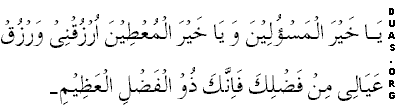 |
Ya Khayral Mas'ulin wa Ya Khayral Mu'tin, Urzuqni warzuq 'Ayali Min Fazlika Fa Innaka Zulfazlil 'Azim
It is also Mustahab in Tashahud, to place one's hands on one's thighs, with joined fingers, and to look at one's laps, and to say this after tashahhud and salawat:
And accept his intercession* and elevate
his rank (referring the Holy Prophet) |
 |
Wa taqabbal shafa'atahu warfa' darajatahu
Upon completing the two prostrations (of the last unit of prayer), you may sit down to utter the statements of tashahhud and taslim. It is recommended to sit on your hips and to say the following before the tashahhud statement:
|
بِسْمِ ٱللَّهِ وَبِٱللَّهِ |
bismill�hi wa bill�hi |
In the Name of Allah (I begin) and in Allah (I trust). |
|
وَٱلْحَمْدُ لِلَّهِ |
wal�amdu lill�hi |
All praise be to Allah. |
|
وَخَيْرُ ٱلاسْمَاءِ لِلَّهِ |
wa khayru al-asm�'i lill�hi |
The most excellent names be to Allah. |
|
اشْهَدُ انْ لاَ إِلٰهَ إِلاََّ اللَّهُ |
ashhadu an l� il�ha ill� all�hu |
I bear witness that there is no god save Allah. |
There are many Supplication in Qunoot : Click here & 25 Quranic duas
|
|
There is none worth worshipping but Allah Who is Forbearing and Generous
|
Laa ilaaha illallaahul Halimul Karim |
لآ اِلَهَ اِلاَّ اللّهُ الْحَلِيْمُ الْكَرِيْمُ |
|
|
There is none worth worshipping but Allah Who is Most High and Great
|
Laa ilaaha illallaahul �Aliyyul �Azim |
لآ اِلَهَ اِلاَّ اللّهُ الْعَلِيُّ الْعَظِيْمُ |
|
|
Glory be to Allah, Who is the Sustainer of the seven heavens and of the seven earth
|
Subhaanallaahi Rabbis Samaawaatis Sab' |
سُبْحَانَ اللّهِ رَبِّ السَّمَاوَاتِ السَّبْعِ |
|
|
And Who is the Sustainer of all the things
|
wa Rabbil �Arzinas Sab' |
وَ رَبِّ الاَرْضِيْنَ السَّبْعِ |
|
|
in them, and between them,
|
wa maa fihinna wa maa baynahunna
|
وَ مَا فِيْهِنَّ وَ مَا بَيْنَهُنَّ وَ |
|
|
And Who is the Lord of the great �Arsh (Divine Center of Authority & Power)
|
wa Rabbul 'Arshil �Azim |
رَبُّ الْعَرْشِ الْعَظِيْمِ |
|
|
And all praise for Allah, the Sustainer of the worlds. |
Wal Hamdul lillaahi Rabbil 'Aalamin |
وَ الْحَمْدُ لِلّهِ رَبِّ الْعَالَمِيْنَ |
| La ilaha illallahul Halimul Karim, La ilaha illallahul 'Aliyyul 'Azim, Subhanallahi Rabbis samawatis sab', wa Rabbil 'arazinas sab', wama fi hinna wama bayna hunna, wa Rabbil 'arshil 'azim, wal hamdu lillahi Rabbil'alamin. | 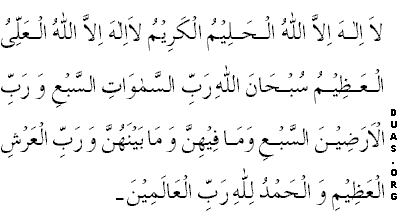 |
Another Recommended Qunoot :-Allahuma Inni Asaluka bi Hakki Fatimata wa Abiha wa Ba’liha wa Baniha wa Sirril Mustawdai Fiha an Tusaaali ala Muhammadin wa aali Muhammad. Wa an Taf’al bi Ma Anta Ahlu wa la Taf’al bu Ma Ana Ahlul.”
Click here for Duas AFTER completion of salaat