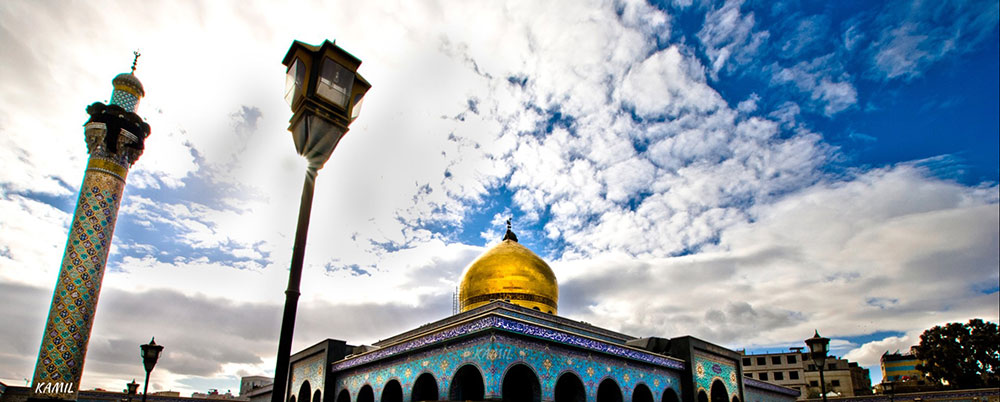
السَّلاَمُ عَلَيْكِ يَا بِنْتَ سَيِّدِ الأَنْبِياءِ
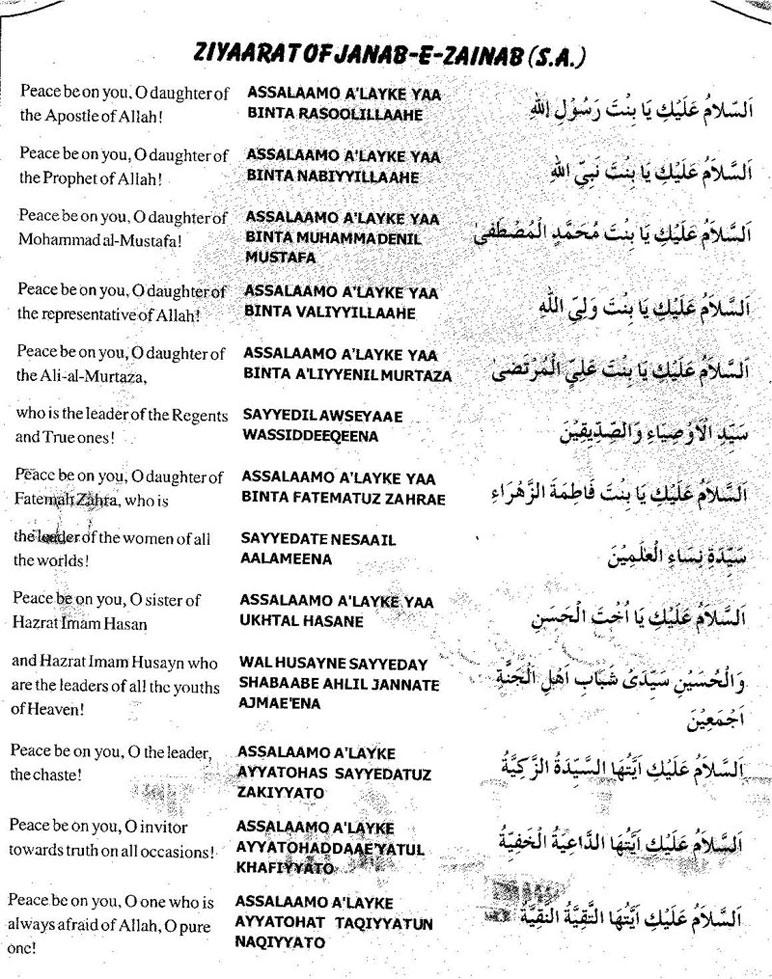
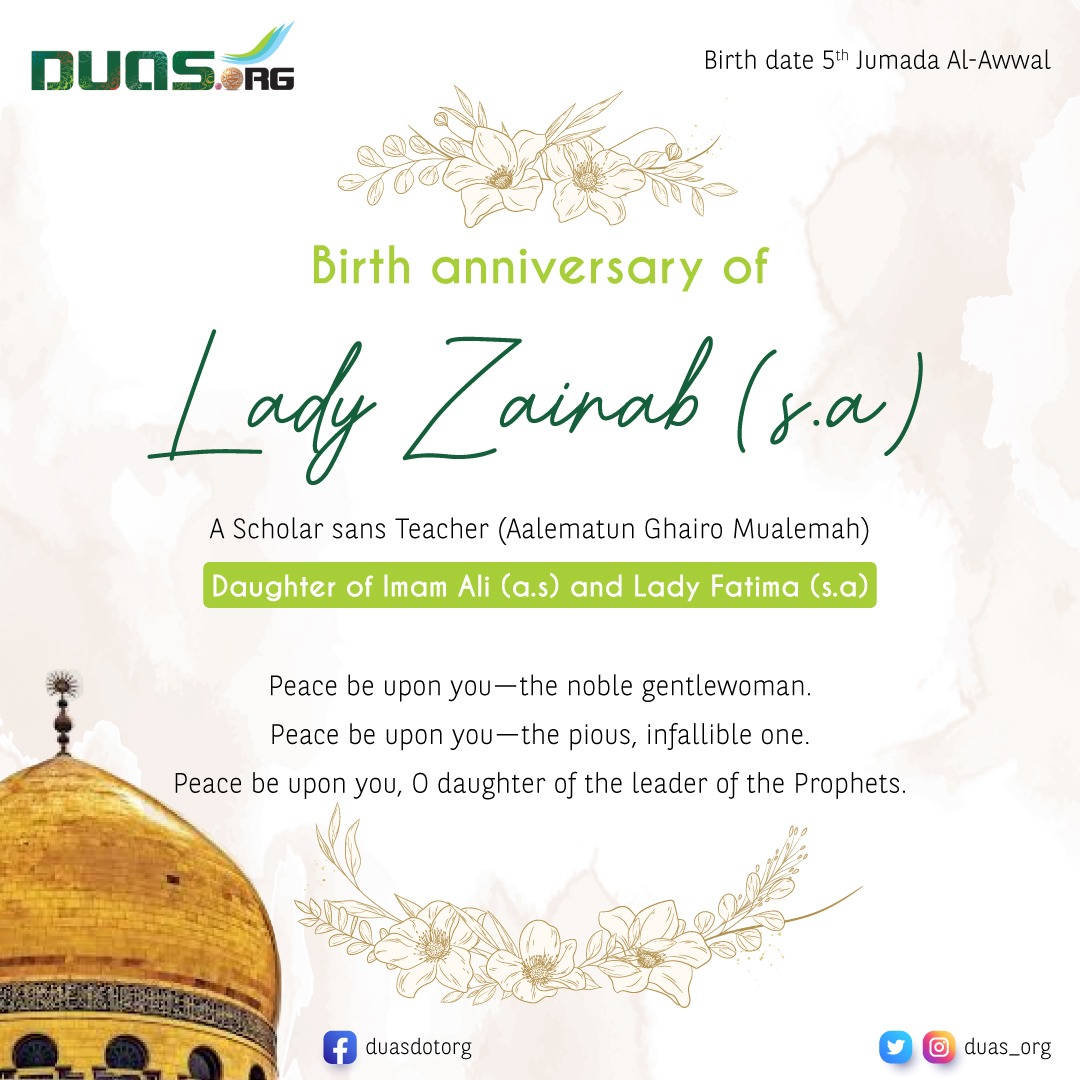
Peace be upon you, O daughter of the leader of the Prophets.
السَّلاَمُ عَلَيْكِ يَا بِنْتَ صَاحِبِ الحَوْضِ وَاللِّوَاءِ
Peace be upon you, O daughter of the owner of the (Heavenly) Pond and the Standard.
السَّلاَمُ عَلَيْكِ يَا بِنْتَ مَنْ عُرِجَ بِهِ إلى السَّمَاءِ وَوَصَلَ إلى مَقَامِ قَابِ قَوْسَينِ أوْ أدْنى
Peace be upon you, O daughter of him who was taken to the skies and who reached the position of the length of two arrows or even closer.
السَّلاَمُ عَلَيْكِ يَا بِنْتَ نَبِيِّ الهُدَى وَسَيِّدِ الوَرَى وَمُنْقِذِ العِبَادِ مِنَ الرَّدَى
Peace be upon you, O daughter of the Prophet of right guidance, the master of (all) human beings, and the savior of the servants (of Allah) from being destroyed.
السَّلاَمُ عَلَيْكِ يَا بِنْتَ صَاحِبِ الخُلُقِ العَظِيمِ وَالشَّرَفِ العَمِيمِ وَالآيَاتِ وَالذِّكْرِ الحَكِيمِ
Peace be upon you, O daughter of the one who has conformed (himself) to sublime morality, enjoyed the broad honor, and owned the (Heavenly) Signs and the Wise Remembrance of Allah (i.e. the Holy Quran).
السَّلاَمُ عَلَيْكِ يَا بِنْتَ صَاحِبِ المَقَامِ المحْمُودِ وَالحَوضِ المَورُودِ وَاللِّوَاءِ المَشْهودِ
Peace be upon you, O daughter of the owner of the Lofty Position, the Pond from which people shall drink (on the Resurrection Day), and the Standard, which shall be witnessed by everybody.
السَّلاَمُ عَلَيْكِ يَا بِنْتَ مَنْهَجِ دِينِ الإسْلامِ وَصَاحِبِ القِبْلَةِ وَالقُرْآنِ وَعَلَمِ الصِّدْقِ وَالحَقِّ وَالإحْسَانِ
Peace be upon you, O daughter of the Path of Islam and the one given the qiblah and the Quran, and the example of honesty, right, and benevolence.
السَّلاَمُ عَلَيْكِ يَا بِنْتَ صَفْوَةِ الأَنْبِياءِ وَعَلَمِ الأتْقِياءِ وَمَشْهورِ الذِّكْرِ في الأرْضِ وَالسَّماءِ، وَرَحْمَةُ اللهِ وَبَرَكَاتُهُ
Peace and Allah's Mercy and Blessings be upon you, O daughter of the choice of the Prophets, the example of the pious ones, and the well known in both the earth and the heavens.
السَّلاَمُ عَلَيْكِ يَا بِنْتَ خَيْرِ خَلقِ اللهِ وَسَيِّدِ خَلْقِهِ وَأَوَّلِ العَدَدِ قَبْلَ إيجَادِ أَرْضِهِ وَسَماوَاتِهِ وَآخِرِ الأَبَدِ بَعْدَ فَناءِ الدُّنْيا وَأَهْلِهَا الَّذِي رُوحُهُ نُسْخَةُ اللاَّهُوتِ وَصُورَتُهُ نُسْخَةُ المُلْكِ وَالمَلَكُوتِ وَقَلْبُهُ خُزانَةُ الحَيِّ الَّذِي لا يمُوتُ، وَرَحْمَةُ اللهِ وَبَرَكَاتُهُ
Peace and Allah's Mercy and Blessings be upon you, O daughter of the best of Allah's creation, the master of His creatures, the foremost created individual before the existence of (Allah's) earth and heavens, the last of the existent ones (who shall endure) after the extinction of this world and its beings, and the one whose soul is a copy of the Divinity and whose heart is the treasury of the Eternal, Subsistent God.
السَّلاَمُ عَلَيْكِ يَا بِنْتَ المُظَلَّلِ بِالغَمَامِ سَيِّدِ الكَوْنَيْنِ وَمَوْلى الثَّقَلَينِ وَشَفِيعِ الأُمَّةِ يَومَ المحْشَرِ وَرَحْمَةُ اللهِ وَبَرَكَاتُهُ
Peace and Allah's Mercy and Blessings be upon you, O daughter of the one who is shaded by clouds, is the master of the Two Worlds, is the chief of the two beings (i.e. man and jinn), and is the Intercessor of the ummah on the Resurrection Day.
السَّلاَمُ عَلَيْكِ يَا بِنْتَ سَيِّدِ الأَوْصِياءِ
Peace be upon you, O daughter of the master of the Prophets' successors.
السَّلاَمُ عَلَيْكِ يَا بِنْتَ إمَامِ الأتْقِياءِ
Peace be upon you, O daughter of the leader of the God-fearing ones.
السَّلاَمُ عَلَيْكِ يَا بِنْتَ رُكْنِ الأوْلِيَاءِ
Peace be upon you, O daughter of the shelter of the saints.
السَّلاَمُ عَلَيْكِ يَا بِنْتَ عِمَادِ الأصْفِيَاءِ
Peace be upon you, O daughter of the support of the choice ones.
السَّلاَمُ عَلَيْكِ يَا بِنْتَ يَعْسوبِ الدِّينِ
Peace be upon you, O daughter of the leader of the Religion.
السَّلاَمُ عَلَيْكِ يَا بِنْتَ أَمِيرِ المُؤمِنِينَ
Peace be upon you, O daughter of the commander of the faithful ones.
السَّلاَمُ عَلَيْكِ يَا بِنْتَ سَيِّدِ الوَصِيِّينَ
Peace be upon you, O daughter of the chief of the Prophets' successors.
السَّلاَمُ عَلَيْكِ يَا بِنْتَ قَائِدِ البرَرَةِ
Peace be upon you, O daughter of the leader of the pious ones.
السَّلاَمُ عَلَيْكِ يَا بِنْتَ قَامِعِ الكَفَرَةِ وَالفجَرَةِ
Peace be upon you, O daughter of the preventer of the infidels and the wantons.
السَّلاَمُ عَلَيْكِ يَا بِنْتَ وَارِثِ النَّبِيِّينَ
Peace be upon you, O daughter of the inheritor of the Prophets.
السَّلاَمُ عَلَيْكِ يَا بنتَ خَلِيفَةِ سَيِّدِ المُرسَلِينَ
Peace be upon you, O daughter of the successor of the Apostles' chief.
السَّلاَمُ عَلَيْكِ يَا بِنْتَ ضِياءِ الدِّينِ
Peace be upon you, O daughter of brightness of the Religion.
السَّلاَمُ عَلَيْكِ يَا بِنْتَ النَّبَأِ العَظِيمِ عَلى اليَقِينِ
Peace be upon you, O daughter of the Great News (as it is certainly proved).
السَّلاَمُ عَلَيْكِ يَا بِنْتَ مَنْ حِسابُ النَّاسِ عَلَيهِ وَالكَوْثَرُ بَينَ يَدَيْهِ وَالنَّصُّ يَومَ الغَدِيرِ عَلَيهِ، وَرَحْمَةُ اللهِ وَبَرَكَاتُهُ
Peace and Allah's Mercy and Blessings be upon you, O daughter of the one to whom the mission of settling accounts with people (on the Resurrection Day) is given, between whose hands the Heavenly Pond (of al-Kawthar) is put, and whom is intended by the (Prophet's) Statement of the Ghadir Day.
السَّلاَمُ عَلَيْكِ يَا بِنْتَ مَنْ قَادَ زِمَامَ نَاقَتِهَا جِبرَائِيلُ وَشَارَكَها في مُصَابهَا إسْرافِيلُ، وَغَضِبَ بِسَبَبِها الرَّبُّ الجَلِيلُ، وَبَكى لمُصَابهَا إبْراهِيمُ الخَلِيلُ وَنُوحٌ وَمُوسَى الكَلِيمُ فِي كَرْبَلاءَ
Peace be upon you, O daughter of the lady whose she-camel was driven by (Archangel) Gabriel, and whose misfortune (of Imam al-Husayn's being slain in Karbala) was shared by (Archangel) Israfil, and due to whose anger the All-exalted Lord was angry, and for whose misfortune of Karbala, (the Prophets) Abraham the Friend of Allah, Noah, and Moses the Spoken by Allah wept.
السَّلاَمُ عَلَيْكِ يَا بِنْتَ البُدُورِ السَّواطِعِ
Peace be upon you, O daughter of the shining full moons.
السَّلاَمُ عَلَيْكِ يَا بِنْتَ الشُّمُوسِ الطَّوَالِعِ، وَرَحْمَةُ اللهِ وَبَرَكَاتُهُ
Peace and Allah's Mercy and Blessings be upon you, O daughter of the brilliant suns.
السَّلاَمُ عَلَيْكِ يَا بِنْتَ زَمْزَمَ وَالصَّفَا
Peace be upon you, O daughter of Well Zamzam and Safa (of the landmarks of Mecca)
السَّلاَمُ عَلَيْكِ يَا بِنْتَ مَكَّةَ وَمِنىَ
Peace be upon you, O daughter of Mecca and Mina –a height in Mecca-
السَّلاَمُ عَلَيْكِ يَا بِنْتَ مَنْ حُمِلَ عَلى البُرَاقِ في الهَوَاء
Peace be upon you, O daughter of him whom was carried by Buraq to the heavens.
السَّلاَمُ عَلَيْكِ يَا بِنْتَ مَنْ حمَلَ الزَّكَاةَ بِأطْرافِ الرِّدَاءِ وَبَذَلَهُ عَلى الفُقَراءِ
Peace be upon you, O daughter of him who carried the zakat(almsgiving) by the margins of his dress to give it to the paupers.
السَّلاَمُ عَلَيْكِ يَا بِنْتَ مَنْ أُسْرِيَ بهِ مِن المَسْجِدِ الحَرامِ إلى المسجِدِ الأقْصَى
Peace be upon you, O daughter of him whom was taken by night from the Inviolable Masjid to the Farthest Masjid.
السَّلاَمُ عَلَيْكِ يَا بِنْتَ مَن ضَرَبَ بِالسَّيْفَين
Peace be upon you, O daughter of him who fought with two swords.
السَّلاَمُ عَلَيْكِ يَا بِنْتَ مَن صَلَّى القِبْلَتَينِ
Peace be upon you, O daughter of him who offered prayers to the two qiblas.
السَّلاَمُ عَلَيْكِ يَا بِنْتَ مُحَمَّدٍ المُصطَفَى
Peace be upon you, O daughter of Muhammad al-Mustafa (the Selected by God)
السَّلاَمُ عَلَيْكِ يَا بِنْتَ عَلِيٍّ المُرْتَضى
Peace be upon you, O daughter of Ali al-Murtada (the Pleased one)
السَّلاَمُ عَلَيْكِ يَا بِنْتَ فَاطِمَةَ الزَّهْراءِ
Peace be upon you, O daughter of Fatimah al-Zahraa (the Resplendent).
السَّلاَمُ عَلَيْكِ يَا بِنْتَ خَديجَةَ الكُبرَى
Peace be upon you, O daughter of Khadijah al-Kubra (the Grand)
السَّلاَمُ عَلَيْكِ وَعَلى جَدِّكِ مُحَمَّدٍ المُخْتَارِ
Peace be upon you and upon your grandfather, Muhammad al-Mukhtar (the Chosen.)
السَّلاَمُ عَلَيْكِ وعَلى أَبِيكِ حَيْدَر الكَرّار
Peace be upon you and upon your father, Haydar al-Karrar (the Attacking.)
السَّلاَمُ عَلَيْكِ وَعَلى السَّادَاتِ الأطْهارِ الأخْيَارِ، وَهُمْ حُجَجُ اللهِ عَلى الأقْطارِ وَسَاداتُ الأرضِ والسَّمَاءِ الَّذِينَ حُبُّهُم فَرضٌ عَلى أَعْنَاقِ كُلِّ الخَلائِقِ
Peace be upon you and upon the pure, choice masters who are the Arguments of Allah on lands, the chiefs of the earth and the heavens, and love for whom is a prescription that is incumbent upon all creatures.
السَّلاَمُ عَلَيْكِ يَا بِنْتَ وَليِّ اللهِ المُعَظَّمِ
Peace be upon you, O daughter of the glorified, holy servant of Allah.
السَّلاَمُ عَلَيْكِ يا عَمَّةَ وَليِّ اللهِ المُكَرَّمِ
Peace be upon you, O aunt of dignified, holy servant of Allah.
السَّلاَمُ عَلَيْكِ يَا أُمَّ المَصائبِ يَا زَيْنَبُ وَرَحْمَةُ اللهِ وَبَرَكَاتُهُ
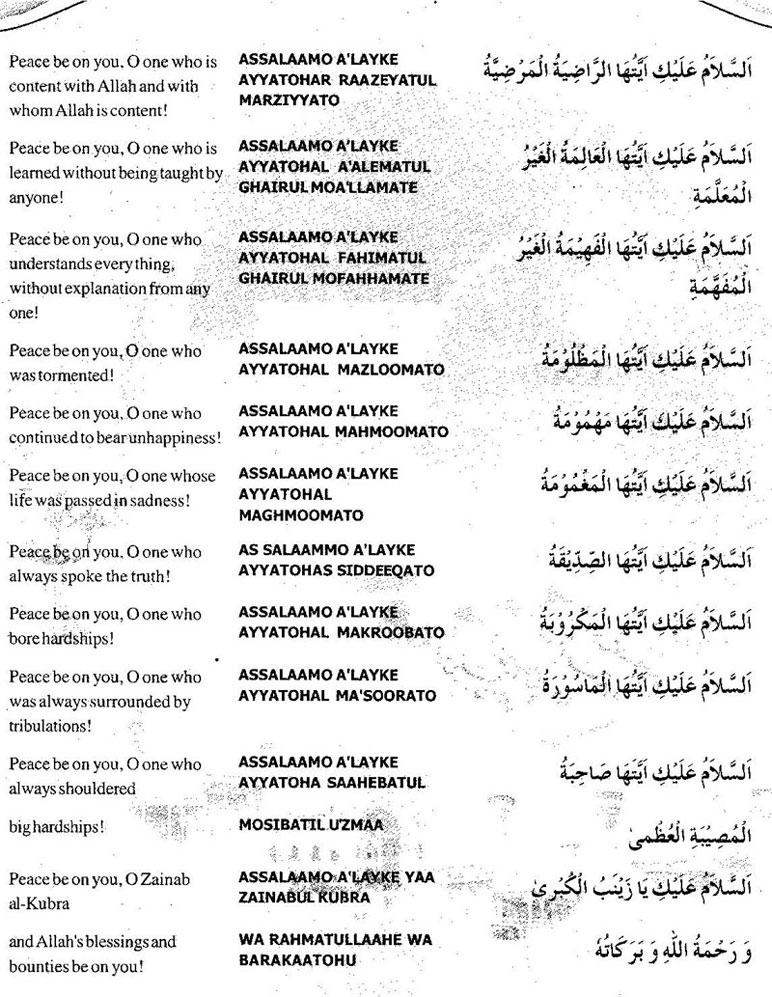
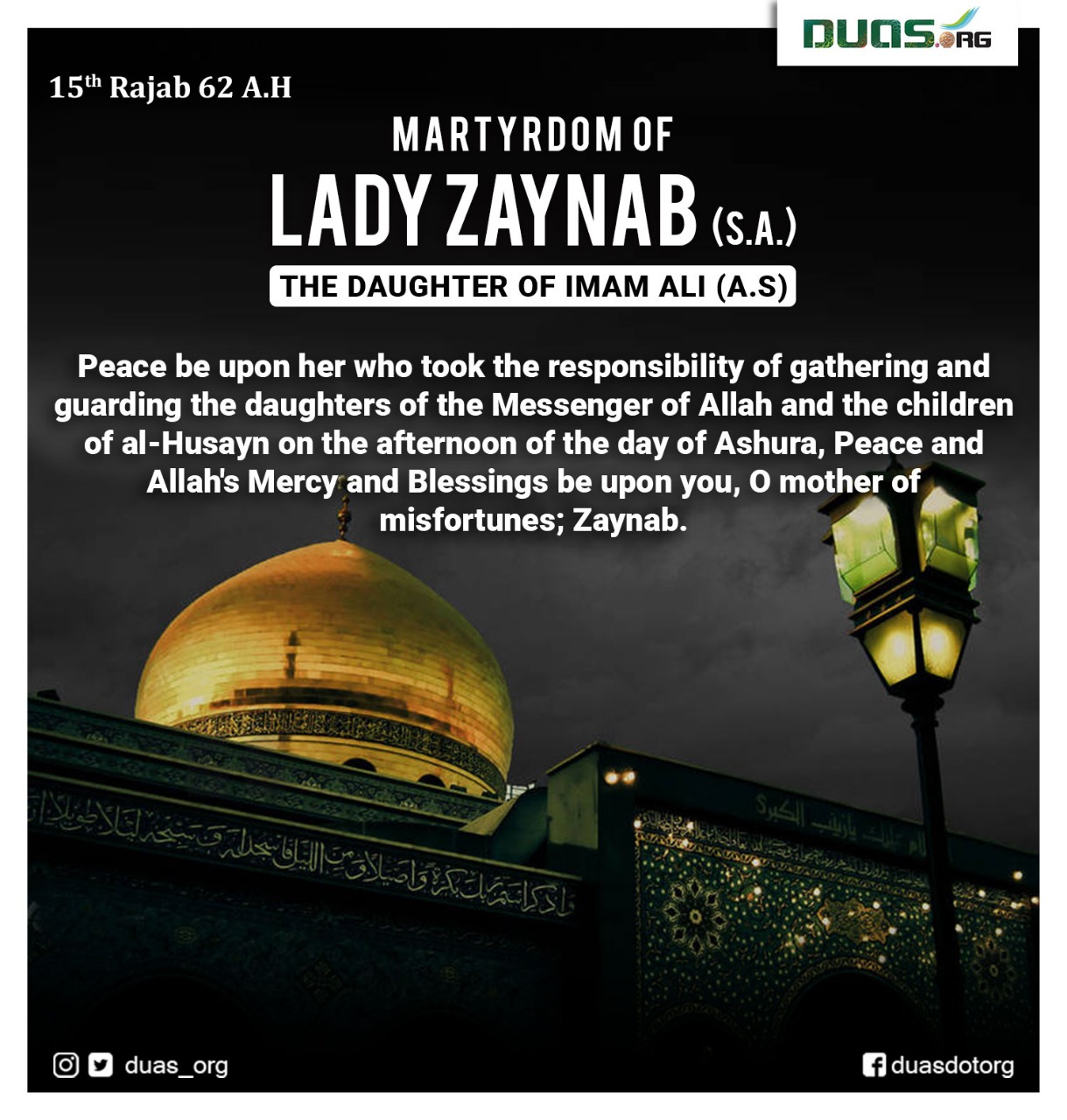
Peace and Allah's Mercy and Blessings be upon you, O mother of misfortunes; Zaynab.
السَّلاَمُ عَلَيْكِ أَيَّتُهَا الفَاضِلَةُ الرَّشِيدَةُ
Peace be upon you—the virtuous, rightly guided one!
السَّلاَمُ عَلَيْكِ أَيَّتُهَا الكَامِلَةُ العَالمَةُ العَامِلةُ
Peace be upon you—the perfect, knowledgeable good-doer.
السَّلاَمُ عَلَيْكِ أَيَّتُهَا الكَريمَةُ النَّبيلَةُ
Peace be upon you—the noble gentlewoman.
السَّلاَمُ عَلَيْكِ أَيَّتُهَا التَّقِيَّةُ النَّقِيَّةُ
Peace be upon you—the pious, infallible one.
السَّلاَمُ عَلَيْكِ يَا مَن ظَهَرَتْ محَبَّتُها لِلحُسَينِ المَظْلومِ في مَوارِدَ عَديدَةٍ وَتحَمِلُ المَصَائبَ المحُرِقَةَ لِلقُلوبِ مَعَ تحَمُّلاتٍ شَديدَةٍ
Peace be upon you—who showed her love for al-Husayn; the wronged, in many situations and had to suffer awful heartbreaking misfortunes.
السَّلاَمُ عَلَيْكِ يَا مَن حَفِظَتِ الإمَامَ في يَومِ عَاشُوراءَ في القَتْلى وَبَذلَتْ نَفسَها في نجَاةِ زَينِ العَابِدينَ في مجَلِسِ أشْقَى الأشْقِياءِ وَنَطَقَتْ كَنُطْقِ عَليٍّ عَليهِ السَّلاَمُ في سِكَكِ الكُوفَةِ وَحَولهَا كَثيرٌ مِن الأعْدَاءِ
Peace be upon you—who guarded the Imam on the Day of Ashura when he was killed, and sacrificed her soul for the salvation of Zayn al-Abidin at the gathering of the most wretched one (i.e. Ubaydullah ibn Ziyad), and addressed a speech, just like (Imam) Ali's, in the streets of Kufa despite the presence of her enemies
السَّلاَمُ عَلَيْكِ يا مَنْ نَطَحَتْ جَبينَها بِمُقَدَّمِ المحْمَلِ إذْ رَأتْ رَأسَ سَيّدِ الشُّهدَاءِ وَيخْرُجُ الدَّمُ مِن تحْتِ قِناعِها وَمِن محْمَلِها بحَيثُ يرى مَن حَولهَا مِن الأعْداءُ
Peace be upon you—who thrust her forehead with the front part of the howdah, when she saw the severed head of the Chief of Martyrs (i.e. Imam al-Husayn), and caused blood to flow from beneath her veil and from the howdah in the view of the enemies.
السَّلاَمُ عَلَيْكِ يا تالِيَةَ المَعْصومِ
Peace be upon you, O the representative of the Infallible Imam.
السَّلاَمُ عَلَيْكِ يا ممُْتَحَنَةُ في تحَمُّلِ المَصائبِ كالحُسَينِ المَظلُومِ، وَرَحْمَةُ اللهِ وَبَرَكَاتُهُ
Peace and Allah's Mercy and Blessings be upon you, O you who were tested through patience against misfortunes, like that of al-Husayn the oppressed.
السَّلاَمُ عَلَيْكِ أَيَّتُهَا البَعيدَةُ عَن الأوْطانِ
Peace be upon you who are far away from you home.
السَّلاَمُ عَلَيْكِ أَيَّتُهَا الأَسِيرَةُ في البُلدانِ
Peace be upon you who were wandered as captive in cities.
السَّلاَمُ عَلَيْكِ أَيَّتُهَا المُتَحَيّرَةُ في خَرابَةِ الشَّامِ
Peace be upon you when you were bewildered in that ruined place in Syria
السَّلاَمُ عَلَيْكِ أَيَّتُهَا المُتَحَيّرَةُ في وُقُوفِكِ عَلى جَسَدِ سَيِّد الشُّهَداءِ وخَاطَبْتِ جَدَّكِ رَسولَ اللهِ صَلّى اللهُ عَلَيه وَآله بهَذا النِّدَاءِ: "صَلَّىٰ عَلَيْكَ مَلائِكَةُ السَّمَاءِ! هٰذَا حُسَيْنٌ بِالعَراءِ مَسْلُوبُ العِمَامَةِ وَالرِّدَاءِ، مُقَطَّعُ الأَعْضَاءِ، وَبَنَاتُكَ سَبَايَا! وَإلىٰ اللهِِ المُشْتَكَىٰ."
Peace be upon you when you were bewildered as you stood by the (severed) body of the Chief of Martyrs and called at your grandfather; the Messenger of Allah, may Allah bless him and his family, saying, "Oh, Muhammad! May the angels in the Heavens bless you! This is Husayn under the open sky! His turban and his clothes are stripped! His limbs are severed! And your daughters are taken captives! Complaining (about this) is only to Allah."
وقَالَت: "يَا مُحَمَّدُ! هٰذَا حُسَيْنٌ تَسْفِي عَلَيْهِ رِيحُ الصَّبَا، مجْذُوذَ الرَّأسِ مِن القَفا، قَتِيلَ أَوْلادِ البِغا. وَاحُزْنَاهُ عَليْكَ يا أبَا عَبْدِ الله."
You also said, "O Muhammad! This is Husayn! Winds are blowing his body! His head is cutt off from the back! He is being killed by sons of wrongdoers ! Oh, for my grief for you, Abu Abdullah!
السَّلاَمُ عَلَيْكِ يَا مَن تهَيَّجَ قَلبُها لِلحُسَينِ المَظلومِ العُريَانِ المَطْروحِ عَلى الثَّرَى وقَالَت بِصَوتٍ حَزينٍ: "بِأبي مَن نَفْسي لَهُ الفِداءُ، بِأبي المَهمُومُ حتَّى قَضى، بِأبي مَن شَيبَتُه تَقطِرُ بِالدِّمَاء."
Peace be upon you whose heart cried out for al-Husayn; the oppressed, the stripped, and the threwn on dust, and you said in a sad tone, "May my father be sacrificed for the one for whom I may sacrifice my soul! Oh, for him who was depressed until he passed away! Oh, for him who had been thirsty until he departed life! Oh, for him whose beard is dropping blood!"
السَّلاَمُ عَلى مَن بَكَتْ عَلى جَسَدِ أخِيها بَينَ القَتلَى حَتّى بَكى لبُكائِها كُلُّ صَدِيقٍ وَعَدُوٍّ، وَرَأى النَّاسُ دُموعَ الخَيلِ تَنحَدِرُ عَلى حَوافِرِهَا عَلى التَّحْقِيقِ
Peace be upon her who wept for the (severed) body of her brother among the killed ones so painfully that every one—whether friend or even enemy, wept for her and, moreover, people, as it is proved by authenticated narrations, saw even horses shed tears, which flew on their legs.
السَّلاَمُ عَلى مَن تَكَفَّلَتْ وَجمَعَتْ في عَصْرِ عَاشُوراءَ بَناتِ رَسولِ اللهِ وَأطفَالِ الحُسينِ وَقامَت لهَا القِيامَةُ في شَهادَةِ الطِّفلَينِ الغَريبَين المَظلومَينِ
Peace be upon her who took the responsibility of gathering and guarding the daughters of the Messenger of Allah and the children of al-Husayn on the afternoon of the day of Ashura, and she stirred up the situation when the two oppressed, strange children were martyred.
السَّلاَمُ عَلى مَن لم تَنَمْ عَينُها لأجْلِ حِراسَةِ آل رَسولِ اللهِ في طَف نِينَوَى وَصَارَت أَسيرَةً ذَليلَةً بِيَدِ الأعْداءِ
Peace be upon her whose eyes did not sleep so as to guard the family of the Messenger of Allah at Taff of Nineveh, and was taken as captive as she was humiliated at the hands of her enemies.
السَّلاَمُ عَلى مَن رَكِبَتْ بَعيراً بِغَيرِ وِطاءٍ وَنَادَت أخَاها أبَا الفَضْلِ بهَذا النِّدَاء: "أخِي أبَا الفَضْلِ، أنْتَ الَّذي أرْكَبْتَني إذْ أرَدتُ الخُروجَ مِن المَدينَةِ"
Peace be upon her who had to ride a saddleless camel and then called on her brother Abu'l-Fadhl (al-Abbas), saying, "O brother! O Abu'l-Fadhl! It was you who helped me ride on a camel when I left Medina."
السَّلاَمُ عَلى مَن خَطَبَتْ في مَيدانِ الكُوفَةِ بخِطْبَةٍ نافِعَةٍ حَتّى سَكَنَتِ الأصْواتُ مِن كُلِّ ناحِيةٍ
Peace be upon her who addressed a remarkably expressive speech at the center of Kufa that she made all voices keep silent (to listen to her with astonishment)
السَّلاَمُ عَلى مَن احْتَجَّتْ في مَجلِسِ ابْنِ زِيادٍ بِاحتْجَاجَاتٍ وَاضِحَةٍ وَقالَت في جَوابِه بِبَيِّناتٍ صَادِقةٍ، إذْ قَالَ ابنُ زِيادٍ لِزَينَبَ سَلامُ اللهِ عَلَيهَا: "كَيفَ رَأَيْتِ صُنْعَ اللهِ بأخيكِ الحُسَينِ؟" قَالَت: "مَا رَأَيْتُ إِلاّ جَمِيلاً."
Peace be upon her who gave clear-cut arguments in the gathering of (Ubaydullah) Ibn Ziyad who said to her, "How did you see that what Allah had done to your brother?" Answering him, she said with honest evidences, "I saw nothing but good!"
السَّلاَمُ عَلَيْكِ يا أَسيرَةً بِأيْدي الأعْداءِ في الفَلواتِ وَرَأيْتِ أهْلِ الشّامِ في حَالَةِ العَيشِ والسُّرورِ وَنشْرِ الرّاياتِ
Peace be upon you who had to be imprisoned by the enemies under an open sky, and had to see people of Syria celebrate (the martyrdom of her brother) with pleasure, joy, and raised flags
السَّلاَمُ على مَن شُدَّ الحَبلُ عَلى عَضُدِها وَعُنُقِ الإمامِ زَينِ العَابِدينَ وَأَدخَلُوها مَعَ سِتَّةَ عَشرَ نَفَراً مِن آلِ رَسولِ اللهِ وَهُم كَالأُسَرَاءِ مُقَرَّنينَ بِالحَديدِ مَظلومِينَ،
Peace be upon her who was tied with a rope on the arm and the neck of Imam Zayn al-Abidin, and she, along with sixteen persons from the family of the Messenger of Allah, was forced to enter (the session of Yazid) while they were enchained with iron fetters
وَقَالَ عَلِيُّ بنُ الحُسَينِ عَلَيهِ السَّلاَمُ لِيَزيدَ: "يَا يَزيدُ ما ظَنُّكَ بِرَسُولِ اللهِ صَلّى اللهُ عَلَيهِ وَآلِهِ لَو رَآنا عَلى هَذِه الحَالَةِ؟"
Meanwhile, Ali ibn al-Husayn (Imam Zayn al-Abidin) said to Yazid, “What if the Messenger of Allah sees us in such a manner? What will be his impression?”
ثُمَّ قَالَت أُمُّ المَصائِبِ زَينَبُ لَهُ: "قَائلاً لَأَهَلُّوا وَاسْتَهَلُّوا فَرَحاً ثُمَّ قَالُوا يَا يَزِيدُ لا تُشَلْ، مُنْتَحِياً عَلَى ثَنَايَا أَبِي عَبْدِاللهِ، عَلَيْهِ السَّلاَمُ، سَيِّدِ شَبَابِ أَهْلِ الجَنَّةِ تَنْكُتُهَا بِمِخْصَرَتِكَ؟"
Then, Lady Zaynab; mother of misfortunes, said to Yazid -after he had poetized, "(Had my forefather whom were killed at the Battle of Badr witnessed this, they would have been very much delighted. then they’d have said, 'May your hands, O Yazid, never be paralyzed')"
ثُمَّ قالَت: "وَلَئِنْ جَرَتْ عَلَيَّ الدَّوَاهِي مُخَاطَبَتَكَ، إنِّي لَأَسْتَصْغِرُ قَدْرَكَ وَأَسْتَعْظِمُ تَقْرِيعَكَ وَأَسْتَكْثِرُ تَوْبِيخَكَ، لَكِنِ العُيُونُ عَبْرَى وَالصُّدُورُ حَرَّى. اَلا فَالعَجَبُ كُلُّ الْعَجَبِ لِقَتْلِ حِزْبِ اللهِ النُّجَبَاءِ بِحِزْبِ الشَّيْطَانِ الطُّلَقَاءِ!
"How dare you hit the lips of Abu ‘Abdullah (a), the Master of the Youths of Paradise?"
She then said, "Although calamities have forced me to speak to you, I see you trivial in my eyes and find your verbal attacks great and I regard your rebuke too much to bear, but the eyes are tearful, and the chests are filled with depression. What is even stranger is that the honored Party of Allah is being killed by the Party of the ‘Released ones’—Party of Shaitan.
َلَئِنِ اتَّخَذْتَنَا مَغْنَماً لَتَجِدُنَا وَشِيكاً مُغْرَماً حِينَ لا تَجِدُ اِلاّ مَا قَدَّمَتْ يَدَاكَ، ﴿وَمَا رَبُّكَ بِظَلَّامٍ لِلْعَبِيدِ﴾ فَإلَى اللهِ المُشْتَكَى وَعَلَيْهِ المُعَوَّلُ في الشِّدَّةِ والرَّخاءِ.
If you regard us as your booty, you shall soon find us as your opponents—that will be when you find nothing but what your hands had committed, “And your Lord never treats His servants unjustly.(41:46)” To Allah is my complaint, and upon Him do I rely.
فَكِدْ كَيْدَكَ وَاسْعَ سَعْيَكَ وَنَاصِبْ جَهْدَكَ! فَوَاللهِ لا تَمْحُوَنَّ ذِكْرَنَا وَلا تُمِيتُ وَحْيَنَا وَلا تُدْرِكُ أَمَدَنَا وَلا تَرْخَصُ عَنْكَ عَارَهَا.
So scheme whatever you wish to scheme, and carry out your plots, and intensify your efforts, for, by Allah, you shall never be able to obliterate our mention, nor will you ever be able to kill the revelation (that was revealed to us), nor will you ever exalt to our position, nor will your shame ever be washed away.
وَهَلْ رَأْيُكَ إلاّ فَنَدٌ وَأيَّامُكَ إلاّ عَدَدٌ وَجَمْعُكَ إلاّ بَدَدٌ. يا يزيد أما سمعت قول الله تعالى: ﴿وَلَا تَحْسَبَنَّ الَّذِينَ قُتِلُوا فِي سَبِيلِ اللَّهِ أَمْوَاتًا بَلْ أَحْيَاءٌ عِنْدَ رَبِّهِمْ يُرْزَقُونَ.﴾
Your view shall be proven futile, your days limited in number, and your wealth wasted on the Day when the caller calls out, “Think not of those, who are slain in the way of Allah as dead; they are alive (and) are provided sustenance from their Lord”. (3:169)
فَالحَمْدُ للهِ رَبِّ الْعَالَمِينَ الَّذِي خَتَمَ لِأَوَّلِنَا بِالسَّعَادَةِ وَالمَغْفِرَةِ وَلِآخِرِنَا بِالشَّهَادَةِ وَالرَّحْمَةِ، وَنَسْأَلُ اللهَ أَنْ يُكْمِلَ لَهُمُ الثَّوَابَ وَيُوجِبَ لَهُمُ المَزِيدَ وَيُحْسِنُ عَلَيْنَا الخِلافَةَ؛ إنَّهُ رَحِيمٌ وَدُودٌ، وَحَسْبُنَا اللهُ وَنِعْمُ الوَكِيلُ .
All praise is due to Allah, Lord of the Worlds, Who sealed the life of our early ones with happiness and forgiveness, and that of our last ones with martyrdom and mercy. We plead to Allah to complete His rewards for them, grant them an increase, and recompense us pleasingly; He is the most Merciful, the most Compassionate. Allah suffices us, and He is the best Guardian.
وَصَلَّى اللهُ عَلى مُحَمَّدٍ وَآلِهِ الطَّيِّبِينَ الطَّاهِرِين
May Allah bless Muhammad and his Pure, Immaculate Household