
www.duas.org
|
CHAPTER
TWO: HOW
DUAS ARE ANSWERED? |
TIME OF DUA
PLACE OF DUA
DUAS WHICH ARE ANSWERED
THE IMPORTANCE OF THE TIME OF DUA
THE IMPORTANCE OF THE PLACE OF DUA
THE RELATION OF GOOD DEEDS WITH DUA
DUA UNDER SPECIAL CIRCUMSTANCE
|
Time of Dua |
a - Friday and Friday night
Imam Sadeq (A.S.) has said
*
 *
*
65.
The Sun has not risen on a day better than Friday.
When the birds of sky meet one another on this day, they greet one
another saying: What a good day!
66.
It is related that the Holy Prophet of Islam (SAW) chose Thursday to
leave his room for outside fresh air in the beginning of summer and chose Friday
to his return to room in the beginning of winter.”
*
 *
*
“If
you decide to give charity, delay it until Friday.”
*
 *
*
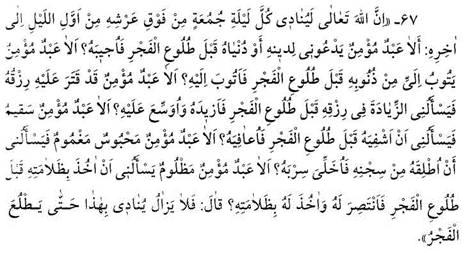
67.
“Throughout Friday night God calls:
-Isn’t
there any believing servant who calls upon Me until before dawn so that I will
grant his worldly and spiritual request?
-Isn’t
there any believing servant who repents his sins before down so that I will
forgive him?
-Isn’t
there any believing servant whose sustenance is meager and asks Me to increase
it before dawn so that I will increase his sustenance?
-Isn’t
there any ailing and believing servant who asks Me to heal him before dawn so
that I will heal him?
-Isn’t
there any imprisoned servant who asks Me to free him from prison so that I will
free him from prison?
-Isn’t
there any oppressed believing servant who asks Me to take his right from the
oppressor before dawn so that I will help him and restore his right?
*
 *
*
68.
“The believing servant makes a request to God and God too delays it
until Friday.”
The
Holy Prophet of Islam (SAW) has said:
*
 *
*
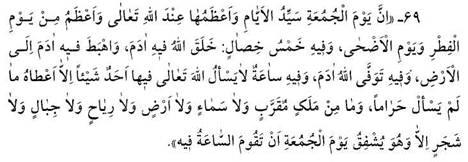
69.
“Surely Friday is the master of days and the most glorious day of God.
Rather it is superior to Eidolfetr and Eidolazha.
Friday has five advantages:
-God
created Adam (AS) on this day.
-God
sent down Adam (AS) from paradise to earth on the same day.
-God
took the life of Adam on such a day.
-There
are hours in Friday when every one who requests something from God, it will be
granted provided that it is lawful.
-Archangels,
the heavens, the earth, winds, mountains, and trees fear that the Last Day
occurs on such a day.”
*
 *
*
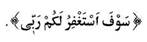
“I
will ask for you forgiveness from, my Lord”
(Yunus, verse 98)
Interpreting
this verse, Imam Sadeq (AS) has said:
*
 *
*
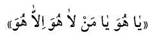
70.
“Jacob delayed asking forgiveness until dawn of Friday night.”
The
other is the last moments of Friday that is:
71.
“When half face of the sun is hidden.”
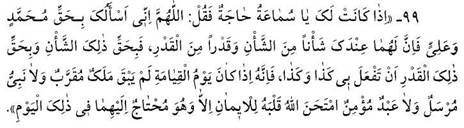
*
 *
*
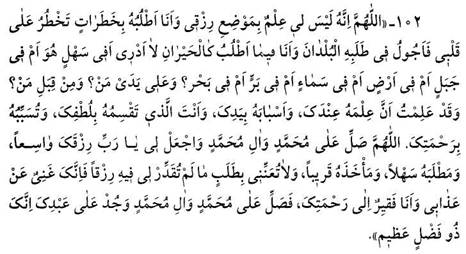
72.
“On Friday one must keep a time from the beginning of moon until an
hour, for the Holy Prophet of Islam (SAW) has said during this hour no servant
requests anything from God unless his request is granted.
b.
Jaber
Ibne Abdullah Ansari has thus narrated:
c.
Time of night prayer
The
Holy Prophet (SAW) has said:
*
 *
*
73.
“Anyone of you who has a need, should request it during night prayer,
for it is especially for you and it has not been granted to former nations (ummahs).”
d.
First,
there are Hadiths indicating the virtues of the recommended prayer after
midnight while people are asleep.
Secondly,
there are Hadiths indicating the virtues of rememberance of God among those
heedless of Him.
Thirdly,
Omar Ibne Ozaineh has quoted Imam Sadeq (AS) as saying:
*
 *
*
74.
“There is an hour in night which if a believing servant appreciates by
performing prayer and calling upon God, his request will be certainly granted.
I said: My God bless you, which is that hour?
He said: After midnight, the first one sixth of its second half.
e.
There
are many Hadiths in this relation
The
Holy Prophet (SAW) said:
*
 *
*
75.
“In the last hours of every night, God says:
-Is
there anyone who calls upon Me so that I will answer him?
-Is
there anyone who request so that I will grant it?
-Is
there anyone asking forgiveness so that I will forgive him?
-Is
there anyone repenting so that I will accept his repentence?
Ibrahim
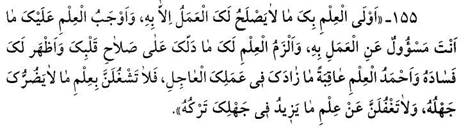
Ibne Abi Mahmood says I said to Imam Reza (AS): people say: The Holy Prophet
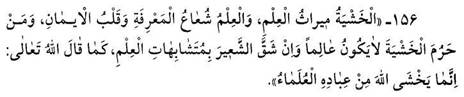
(SAW) has said: God comes to the sky of the world every night.
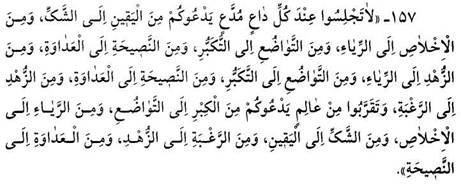
What is your opinion of it?
He said:
*
 *
*
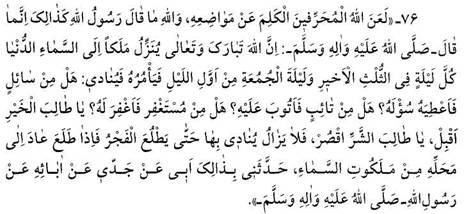
76.
“May God curse those who distort the words of others.
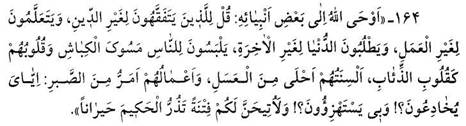
By God! The Holy Prophet (SAW) did not day it, rather he said: In the
last third of every night and on Friday night, from its beginning, God sends an
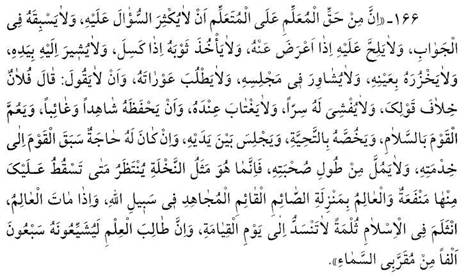
angel to the sky of this world calling:
-Is
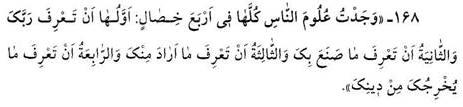
there anyone who calls upon Me so that I will grant his request?
-Is
there anyone who repents so that I will accept his repentence?
-Is
there anyone asking forgiveness so that I will forgive him?
-O
seeker of good! come to Me and O seeker of evil! stop it.
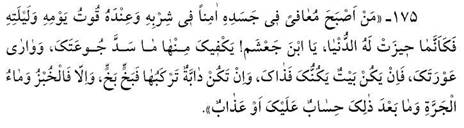
God keeps on calling until dawn.
At this time that angel returns to his place in the heavens.
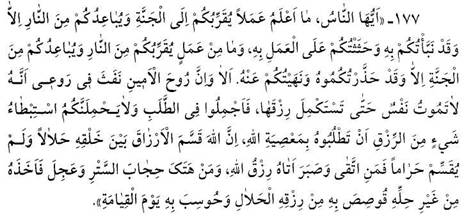
This was polyquoted by my father, his father and the Holy Prophet
(SAW).”
Advice
One
who truly acknowledges the Holy Prophet of Islam (SAW) and his cleansed and pure
children (AS) and knows that whatever these honorable ones have brought from
God, is true, should present his needs to God during these hours and should not
leave His call unresponded.
Otherwise he will be among those about Whom God has said:
*
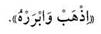
 *
*
“Surely
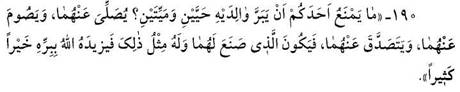
those who are too proud for My service shall soon enter hell abased.”
Hence he will be among those deprived of God’s Mercy and the heavy load
of sins will rest on his shoulders as mentioned in the following Hadith:
*
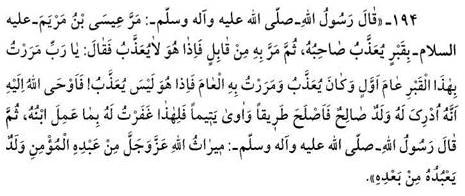
 *
*
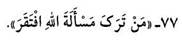
77.
“Whoever abandons request from God, will become destitute.”
*
 *
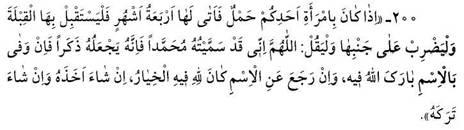
*
78.
“Don’t let your eyes fully enjoy sleep, for eyes are the least
thankful to God.”
*
 *
*
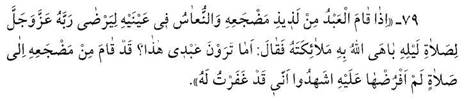
79.
“When a true believer rises up to please God with the recommended
prayer after midnight, while slumber has overpowered his eyes, God speaks
proudly to His angels saying: Do you see this servant of mine who has risen up
to perform the prayer which is not obligatory! Therefore I take you as witness
that I have forgiven his sins.”
Each
day is divided into twelve hours and each hour is associated with one of the
twelve Imams (AS) and it is proper to seek the mediation of that Imam in that
hour. There
are special Duas for those hours in the book “Mesbah”.
Seyed Ibne Tavoos too says the days of week are associated with the Imams
(AS) and each day we are their guests.
Hence Ziyarat (visitation) of the Imam or Imams would be proper on that
day as follows:
Saturday
is associated with the Holy Prophet (SAW)
Sunday
is associated with Imam Ali (AS)
Monday
is associated with Imam Hassan and Imam Hussein (AS)
Tuesday
is associated with Imam Zainol Abedeen, Imam Baqeer and Imam Sadeq (AS)
Wednesday
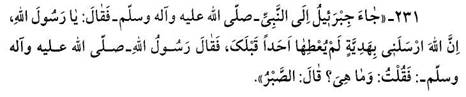
is associated with Imam Kazem, Imam Reza, Imam Javad and Imam Hadi (AS)
Thursday
is associated with Imam Hassan Asgari
Friday
is associated with Imam Mehdi (AS)
f. Grand Night
(Leylatolghadr)
Grand
night is in the holy month of Ramadhan but it is not clear which night it is.
It may be 19th, 21st or 23rd night is the most likely.
g.
Ahya Nights (spending night awake)
1.
The first night of Rajab
2.
The night of fifteenth of Sha-baan.
3.
The night of E’edul Fitr
4.
The night of E’edul D’uh’aa
80.
“It was surprising for Imam Ali to be idle on such nights and not to
pray.”
h.
Araf day
It
is a day for prayer (Dua) and asking one’s need.
Hence although observing fast is highly recommended if one becomes too
ill to pray, it is better to pray and not fast.
i.
When wind is blowing
j. When call to prayer is made
k. When it is raining
l. When the first drop of a martyr’s blood is dripped.
Zeid
shahham has quoted Imam Sadeq (AS) as saying:
*
 *
*
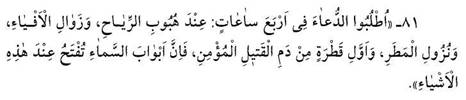
81.
“Pray on four occasions: When the wind is blowing, at noon, when rain
is falling, and when the first drop of a believer’s blood drips, for at such
times the gates of heavens are opened.”
*
 *
*
82.
“When noon arrives, the gates of heavens will be opened and great
desires will be fulfilled.”
*
 *
*
“During
a time one can perform a four-rakat prayer with tranquility.”
m.
Abol
Sabak Kanani quotes Imam Baqer (AS) as saying:
*
 *
*
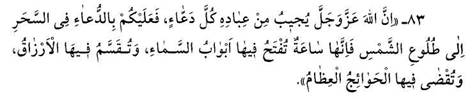
83.
“God answers the call of those servants of His who often pray (Dua).
Therefore, pray at dawns until sunrise, for the gates of paradise are
opened at this time.
Daily food is distributed at this time and great needs are met.”
|
Place
of Dua |
a
- Arafaat land
It has been related that:
*
 *
*
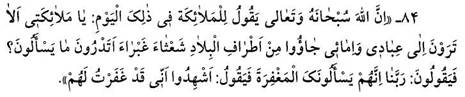
84. “On
that Day of A’rafah, God says to His angels: O My angels! Don’t you see My
servants who have come from various countries with their hair disshevelled and
dust on their faces?
Do you know what they want?
The angels say: O Lord, They are asking You to forgive their sins.
A this time God says: I take you as witness that I have forgiven their
sins.”
It has also been related that:
*
 *
*
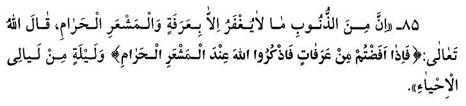
85. “Some
of the sins are forgiven only these occasions: Arafat and Masharolharam about
which God said: When you leave Arafat, remember God in Masharolharam, and one of
the nights of Ahya.”
b. The
two Sanctuaries (in Mecca)
Imam Reza (AS) has said:
*
 *
*
86. “No
one has ever had a stop on these mountains unless his prayer was answered.
If he is a believer, he will have a spiritual reward and if he is an
unbeliever, he will have a worldly reward.”
c. Mosque
Since mosque is God’s
house, anyone going there wishes to visit God.
A sacred Hadith says:
*
 *
*
87. “Know
that mosque are My houses on the earth, therefore happy is a servant who
performs ablution in his own house and visits Me in My house.”
God is too generous to leave His pilgrims desperate and deprived.
Saeed Ibne Mosleum has quoted Moavieh Ibne Ammar that whenever Imam Sadeq
(AS) had a need, he request it at noon, that is to say, he first gave alms,
sniffed something with good smell. then went to mosque and request his need from
God. It
goes without saying that what he did suggests four things:
First, noon is the time of requesting your need.
Second, it is recommended to give alms.
Third, it is good to sniff something with good smell.
Fourth, mosque is a good place for requesting one’s needs.
d. Near
the Holy shrine of Imam Hussein
The Holy shrine of Imam Hussein is more sacred and honorable than other
places. A
Hadith says:
*
 *
*
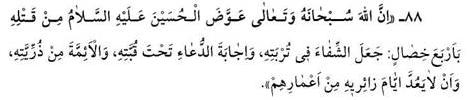
88. “God
has compensated Imam Hussein’s martydom with four rewards:
-He has placed healing in his tomb
-He has placed fulfilment of legitimate desires under his dome
-The following Imams are his offsprings
-The time pilgrims spend for his visitation is not considered as part of their
life.”
It has been related that once Imam Sadeq (AS) was ill.
The Imam ordered someone to be hired to go to the tomb of Imam Hussein
and to pray for him.
The hired man expressed surprise, for to him there was no difference
between the two Imams.
Therefore he asked for the reason.
Imam Sadeq (AS) said:
*
 *
*
89. “This
man is right but he does not know that God has specified lands where Duas are
answered and the Holy shrine of Imam Hussein is one of them.”
|
Duas
which are answered |
a
- A Dua
containing the Chief Name of God whether specified or unspecified.
No one but the prophets and Imams know what the Chief Name of God is.
Ibne Abbas quoting the Holy Prophet of Islam (SAW) has said:
90. “The
Chief Name of God is in the last verses of the Quranic Chapter Hashr (The
Bamishment).”
91.
“The chief Name of God is in the Throne verse and in the beginning of
Alay Imran (The Family of Imran) hence the Everliving, the Self-subsisting (Alhayyolghayoom)
are said to be surely the Chief Names of God, for it is only these two
attributes that are both in the Throne verse and in the beginning of Alay Imran.”
The Holy Prophet (SAW) has said:
*
 *
*
92. “In
the Name of Allah, the Beneficent, the Merciful is closer to the Chief Name of
God than the black of eye to its white.”
It is said that the Chief Name of God is either
*
 *
*
“the Everliving or the Self-subsisting” or
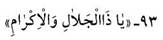
(Ya Zaljalal val Ekram)
*
 *
*
93. “The
Lord of Majesty and honor”
(Ya
hova ya man lahova ella hoo)
*
 *
*
94.
“It is Allah”
*
 *
*
Which is the most known Attribute of God.
It has the most superior position among words for remembering God.
It is the Imam of other Names.
In the monotheistic words (Laelahaellallah) only this Allah has been
mentioned. If
someone wishes to assert his being a muslim, he has to say it.
1- The
hypothesis that Allah is the chief Name of God is extremely likely.
2- This
Holy name has special advantages as compared to other Attributes as follows:
First it is proper name especially for God, for no one else can be called Allah.
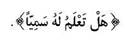
It is for this reason that God in verse 65 of the Quranic Chapter, Marium, says:
*
 *
*
“Do you know anyone equal to Him?”
*
 *
*
96. “Whoever
says: Allah for ten times, it is said to him: Here am I , O My servant, say what
you need so that it will be granted.”
It has been related that:
*
 *
*
97. “Whoever
says: O Lord for ten times” he will hear the same call.
And so is O Lord, O Lord, O Master.
(Ya’rab, ya’rab ya’sayyeda’h)
*
 *
*
It has also been related that:
*
 *
*
98. “Whoever
says O Allah, O Lord, O Master” three times in his prostration” (YA Allah,
ya rabbah, ya seyyeda) he will hear the same call.
Samaeh has quoted Imam Kazem (AS) as saying:
*
 *
*
99. O
Samaeh, whenever you desire something say: O God! By Mohammad and Ali who are
honorable to You, fulfill my desire which is such and such, for on the Day of
Judgment, there is no archangel, nor any messenger or a believing servant whose
heart has been tested for his belief save he needs these two honorable
persons.”
d. Ibne
Abi Amir has quoted Moavieh Ibne Ammer as saying:
*
 *
*
100. “Every
person who after obligatory prayer says for three times: O You who will do
anything You wish and none save You can do whatever he wishes, and requests
something from God, his desire will be fulfilled.”
e. It
has also related that if a person wishes to repay his debt, he should recite the
following on Friday or any other day:
*
 *
*
101. “O
Allah! Make me independent of others with Your giving and lawful sustenance.”
f. And
for the increase in sustenance, he should recite the following after morning
prayer:
*
 *
*
“Glory be to Allah, and praise is due to Him.
I am seeking forgiveness from Allah, and asking for His Grace."
g. And
after night prayer he should say:
*
 *
*
102. “O
God! I do not know where my sustenance is to be found but I an seeking it in
cities on the basis of conjectures which occur to my heart.
I wonder where my sustenance is.
Is it to be found in the pastures, mountains, the earth or the heavens?
Is it in the land or seas?
In whose hands or by whom is it to be found?
But I know that only You know both its place and its ways and means and
that you divide it according to Your Grace and Mercy.
O God! Send greetings upon Mohammad and his household and increase my
sustenance, make it easy to obtain, and its place near.
And do not put me into trouble for that which is not destined for me.
Surely You are free from my torment but I am it need in need of Your
Mercy. Therefore,
send greetings upon Mohammad and forgive Your servant, for You are of bounty
abounding.”
h.
For keeping away fear of a tyrant and going to a tyrant ruler, one should
recite the Dua which Imam Sadeq (AS) recited when he went to Mansoor:
*
 *
*
103. “O
my asset during afflictions! O my Helper during hardships! protect me with Your
eye to which sleep does not find its way, and protect me with Your pillar which
does not break.”
i- For
repaying one’s debt, one should recite what is related by Maaz Ibne Jabal who
said:
I failed to attend Friday prayer so the Holy Prophet (SAW) said:
* 104
_
يا معاذ ما منعك ( يمنعك ) عن صلاة الجمعة
*
104. “O Maaz! What kept you from attending Friday prayer?”
I said O Messenger of Allah, I owe John, the Jew about serven Mesghal
(35 grams) of gold and he is keeping watch at my door.
I was afraid of being caught by him.
The Holy Prophet (SAW) said:
*
 *
*
“Would
you like God to repay your debt?”
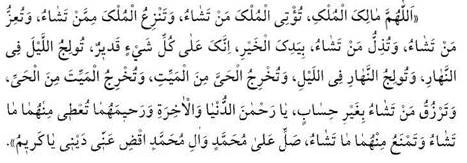
I said: Yes O Messenger of Allah! The Holy Prophet said: recite:
*
 *
*
“O Allah, Master of the kingdom! You give the kingdom to whomsoever You
please and take away the kingdom from whomsoever You please, and You exalt whom
you please and abase whom You please; in Your hand is the good; surely, you have
power over all things.
You make the night to pass into the day and You make the day pass into
the night, and You bring forth the living from the dead and You bring forth the
dead from the living.
and You give sustenance to whom You please without measure, O Merciful in
the world and Hereafter.
You bestow these two Mercies upon whomever You wish and withhold it from
whomsoever you wish, O God send greetings upon Mohammad and his household and
have my debt repaid, O Generous One.”
Then the Holy Prophet (SAW) said:
*
 *
*
“If your debt in gold is as much as the whole earth, God will repay it on
your behalf.”
j- For
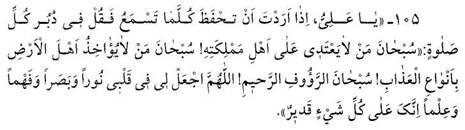
developing a flawless memory, the following Dua was taught by the Holy Prophet
(SAW) to Imam Ali (AS):
*
 *
*
105. “O
Ali! If you wish to memorize whatever you hear, recite the following after every
obligatory prayer: Glory be to Him who does not treat the citizen of His kingdom
unjustly and harshly, glory be to Him who does not let torment and pain come
suddenly upon mankind, glory be to the Compassionate, the Merciful.
O Allah fill my heart and mind with true enlightenment, discerning
intelligence, quick understanding and knowledge, verily You are able to do all
these things.”
k- For
repelling neighbour’s nuisance
A man went to Imam Hassan (AS) complaining of his neighbor’s nuisance.
The Imam said:
*
 *
*
106. “Perform
a two-Rakat salaat after evening prayer and then say: O Mighty in prowess, O
Mighty, O You whose plan is strong, O You who have abased all creatures before
Your Might! Save me from the evil of such a person as You will.”
The man acted according to Imam Hassan’s order.
At midnight a wailing was heard and he was informed that his neighbor had
died.
|
Importance
of Time of Dua |
a- Dua-us
simmat
*
 *
*
107. “O
Allah! I beseech You through the honor of this prayer (Dua) and through the
honor of the names not mentioned therein, and through the interpretation of
those names which no one save You knows, fulfill my desires of..
b. Imam
Baqer (AS) has been related as saying: Open the Holy Quran on the second quarter
of the holy month of
Ramadhan and say:
*
 *
*
108. “O
God! I beseech You through the Holy Quran and through what is therein and
through Your Chief Name, the Great, and Your Beautiful Names and verses causing
fear and hope, place me among those who are free from the Fire of Hell.”
Then ask your desire.
c.
Reciting “Suratolghadr” (The Majesty) in the last third part of
Friday night.
109. The
virtue of reciting of “Suratolghadr” in the last third part of Friday night
has been mentioned in a Hadith.
Reciting any Dua after it has been recommended.
|
The
Importance of place of Dua |
a.
Special Dua near the grave of Imam Hussein (AS).
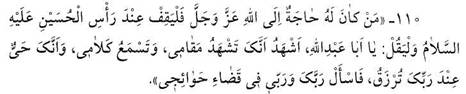
Imam Sadeq (AS) has been quoted as saying:
*  *
*
110. “If
a person has desire, he should go to top of the grave of Imam Hussein saying: O
Aba Abdullah! I bear witness that you witness my status, that you hear my words,
that you are alive, and enjoy special sustenance.
Therefore beseech God to fulfill my desires.
b. Special
Dua near the grave of Imam Hadi (AS)
It has been related that a person used to receive annuity from caliph but
it had been cut by him for a few years.
This person went to Imam Hadi (AS) and told him story asking him to
intercede for him with the caliph.
At night the emissary of caliph came to him to say that he had been
called to the court.
When he reached the court, he said to the doorman: Has Ali Ibne Mohammad
Hadi (AS) been here?
He said: No.
Finally he arrived in court and the caliph warmly received him, placed
him near himself and ordered to give to him what had been withheld during those
few years. The
man left the court for home.
The doorman whose name was “Fatah” said him: Tell Imam Hadi to teach
me the same Dua he has taught you.
The man then went to Imam Hadi and when the Imam saw his cheerful face
said: You
look happy, it seems that you are pleased.
He said: Yes, but they say you have not gone to caliph.
He said:
*
 *
*
111. “God
has made us to promise that we should resort only to Him in important affairs,
and request from Him alone.
I feared that if I break the promise, He will break it too.”
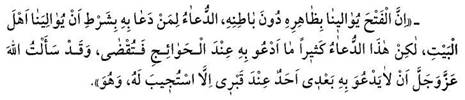
The man said: Fatah says: Kindly teach me the same Dua.
The Imam said:
*
 *
*
“Fatah loves us only on the surface and not in his heart.
Dua has a requisite and that is love of we Ahlulbeit (household of the
Holy Prophet).
As for Dua, I should say it is the one I recite invoking God to fulfill
my desire. I
asked God to fulfill the desire of whoever comes to my grave and recite the Dua!
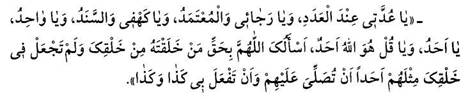
The Dua is as follows”:
*
 *
*
“O the asset of my old age! O my Hope and Trust! O my Heaven and Support! O
the Unique One, say he , Allah is one.
O God! Through that group of creatures the like of which You have not
created (Mohammad and his household) send greetings upon them and fulfill my
desire of....”
Note: As Imam Hadi (AS) said: Dua is fulfilled only if there is a love of
ahlulbeit. Furthermore,
it is a requisite for all the obligatory and recommended deeds to be accepted by
God. Mohammad
Ibne Moslem has quoted Imam Mohammad Baqer or Imam Ja-fat Sadeq (AS) as saying:
112. “O
Aba Mohammad! The parable of we, the household of the Prophet is the parable of
the household in Bani Israel.
Whenever one of them strove in the way of God for forty days and recited
Dua, it was fulfilled.
Yet the Dua of one of them, after devotion of forty nights, was not
fulfilled. So
he went to Prophet Jesus (AS) complaining of the situation and asked him to
recite Dua for him. Having purified himself, Jesus performed prayer and then
recited a Dua.
Revelation came to him saying:
O Jesus! My servant did not come through the right way.
He supplicated while there was doubt in his heart about your prophethood.
Hence his Dua was not fulfilled.
Jesus (AS) said to the man: Do you call on God while you
have doubt about His messenger?
The man said; O spirit of God! What you say is right.
Call on God to remove this doubt from me.
Here, Jesus (AS) recited Dua for him.
God too made a favor and the man returned home while becoming a true
believer.
We, the household of the prophet are the same.
God does not accept the deeds of a servant who has doubt about us.”
|
Relation
of Good Deeds with Dua |
a-
After salat (prayer)
Imam Ali (AS) has quoted the Holy Prophet (SAW) as saying:
*
 *
*
113. “Whoever
performs an obligatory prayer and recites a Dua, it will be fulfilled.”
Ibne Faham says he had seen Imam Ali in his dream asking him about the
veracity of this Hadith.
The Imam said: It is true.
Whenever you perform an obligatory prayer, perform prostration while
saying:
*
 *
*
“O God I beseech You through the person who related this Hadith (Ali) and
through the person from whom it has been related (the Holy Prophet)to send
greetings upon them and fulfill my desire...”
*
 *
*
114. “God
has made prayer obligatory to you at hours which are the most favored with Him.
Therefore, request your desire after performing prayer.”
Imam Ali (AS) has been quoted as saying:
*
 *
*
115. “No
one of God’s servants completes his prayers unless he wishes for paradise,
seeks refuge with Him from the Fire of Hell and asks Him to give him a Houri as
a wife.”
Abi Hamzeh says; I heard Aba Ja’far Imam :Mohammad Baqer saying:
*
 *
*
116. “When
a believer rises up to perform prayer, God makes Houri to attend to him.
And if the believer rises up after prayer and does not desire Houri,
those Houri will be scattered with surprise.”
Fazl Baqbaaq has quoted Imam Sadeq (AS) as saying:
*
 *
*
117. “Dua
will be fulfilled in four situations:
in odd prayer, after dawn, afternoon, and after evening.”
In a Hadith, it has been related: prostrate after evening and recite a
Dua.
b. The
Dua of a needy person
When something is given to a needy person, the Dua of that needy person
will be fulfilled.
If he recites Dua for himself, it will not be fulfilled.
Imam Zeinal Abedeen (AS) used to say to his servant who had the duty to
give alms to the poor:
*
 *
*
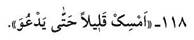
118. “Make
a pause before the needy person so that he will recite a Dua.”
He also said:
*
 *
*
119. “A
needy person’s Du is not rejected.”
It
has also been said that the Imam used to say to his servant to tell the needy
person to recite Dua.
Imam Mohammad Baqer (AS) has been quoted as Saying:
*
 *
*
120. “When
you give something to needy persons, ask them to recite Du, for their Du for you
will be fulfilled but not for themselves.”
|
How
to Give Alms |
Whenever Imam Zeinol Abedeen gave alms, he would kiss his own hands.
When They asked him the reason, he said:
*
 *
*
121. “Before
alms is put in the hand of needy man, it is placed in God’s hand.”
Imam Ali (AS) has said:
*
 *
*
122. “When
you give alms to a needy man, the alms giver should kiss his hand, for God
receives the alms before it is put in the hand of the needy man, since God is
the Receiver of the alms.”
The Holy Prophet (SAW) has said:
*
 *
*
123. “Alms
given by a believer is put in the hand of God before it is put in the needy
man’s hand.”
Then the Holy Prophet recited verse 104 of the Quranic chapter Tawbeh
(Repentance):
*
 *
*
“Do they not know that Allah accepts repentance from His servants and takes
the alms and that Allah is the Oft-returning (to mercy), the Merciful?”
Imam Sadeq (AS) has been quoted as saying:
*
 *
*
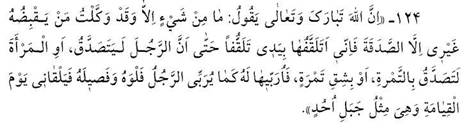
124. “God
says: For
every good deed I have appointed a deputy to receive it save alms which I Myself
receive immediately.
A man or a woman may give one or half date as alms but I will make it big
as a colt grows into a horse and young camel grows into a camel so as to meet Me
on the Day of Judgment while one or half date has become as big as Ohood
Mountain.”
Imam Sadeq (AS) has said:
*
 *
*
125. “Increase
your sustenance through alms-giving.”
One day Imam Sadeq said to his son “Mohammad”:
126. My
son, how much of allowance is left with you?
-Forty Dinars
-Take it out and give alms in the way of God.
-We have nothing other than this.
*
 *
*
“Give it out in the way of God so that He will reward it to us.
Don’t you know that everything has a key and the key to sustenance is
alms? Therefore
give alms.”
The son of the Imam did so.
Ten days had hardly passed when forty thousand Dinars were sent for the
Imam by someone.
The Imam also said:
*
 *
*
127. “Alms-giving
in the way of God will help repay debts and leave blessings behind.”
The Imam further said:
*
 *
*
128. “Whenever
you become destitute, do business with God through alms-giving.”
Imam Baqer (AS) has said:
*
 *
*
129. “Surely
alms-giving repels seventy afflictions of the world including a bad death.
Surely an alms-giver never dies a bad death.”
It is related that one day Jesus (AS) and his disciples were sitting
together when a man passed by them.
Jesus (AS) said to his disciples:
130.
“This man will die soon.
After the passage of some time, they noticed that the man passed by them
while he was carrying a load of wood.
The disciples asked: O spirit of God! you said he would die soon where as
he is still living.
Jesus said to that man: Put down your load of wood.
He did so and opened it.
They immediately saw that a big black snake with a stone in its mouth was
among the wood.
Jesus said to that man: What have you done today?
He said: O spirit of Allah, I had two loaves of bread.
I met a beggar.
I gave one of them to him (wee it not for his charity, that black snake
would bite and kill the man).
Imam Sadeq (AS) said:
*
 *
*
131. “Every
person who gives alms, God will give a better recompense to his children after
his death.”
On verse 36 of the Quranic Chapter Hajj “...and feed the poor man
who is contented and beggar...”
Imam Sadeq (AS) has been quoted as saying:
*
 *
*
132. “The
poor man who is contented is one who asks for something and beggar is your
friend.”
133. Imam
Sadeq (AS) was in Mena where a poor man came to him.
The Imam ordered a bunch of grapes to be given to him.
The poor man said:
I do not need it.
I need money.
The Imam said: My God increase your sustenance?
That man went on his way empty-handed.
Then another poor man came along and the Imam gave him three single
grapes. The
poor man took those three single grapes saying:
*
 *
*
“praise is due to the Lord of the worlds”
who gave my sustenance.
The Imam who saw this scene said to him:
Wait. The
Imam said to his servant: how many Dirhams are on you?
He said: About twenty Dirhams.
The Imam said: Give all Dirhams to him.
The poor man took all Dirhams and said: praise is due to Allah the Lord
of the worlds.
O God! This bounty comes from you.
You are One and have no partner.
The Imam further said: Wait.
Then he took off the shirt he was
wearing and said: Put it on.
That man put on the shirt and said; Praise is due to Allah, that gave a
shirt and made me happy.
O servant of God! May God reward you.
With these words he said good bye and went away.
The narrator says: we were saying to ourselves: Had he not said good bye,
the Imam would have kept on giving away, for every time the poor man said praise
is due to Allah, the Imam would give him something.
Imam Sadeq (AS) said:
*
 *
*
134. “If
a person gives alms and receives his reward, he should not ever make a business
with it or spend it, for the charity belongs to God and no one should share it
with God, for this wealth is like a slave who has been set free and enslaving
him again is not lawful.”
About a person who intended to give alms but the poor man had gone
away, it is related by Imam Sadeq (AS)
*
 *
*
135. “He
should give it away and not return it to his own wealth.”
|
Kinds
of charity |
Charity is classified into five categories:
1- Charity on wealth which was discussed.
2- Charity
on position is when a man of position intercedes for saving believers.
The Holy Prophet (SAW) has said:
*
 *
*
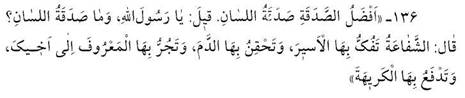
136. “The
best charity is the charity of tongue.
It was said: O Messenger of Allah, what is the charity of tongue?
The Holy Prophet said: It is intercession through which you can set a
captive free, prevent bloodshed, help your believing brother, and expel evil
from him.”
If you treat believing brother fairly with regard to wealth and
honor, these two will be safeguarded.
3- Charity
on wisdom is counsellorship.
In this relation, the holy Prophet said:
*
 *
*
137. “Show
the right way to your believing brother with your knowledge and protect him with
your advice, for both are charity.”
4- The
charity on tongue is when one can put out the fire of differences and make peace
among them. in
verse 114 of the Quranic Chapter, the women (Nessa), God says:
*
 *
*
“There is no good in most of their secret counsels except (in his) who
enjoins charity or goodness or reconciliation between people.....”
5- The
charity on knowledge is through is dissemination among those who are entitle to
it. In
this relation, the Holy Prophet (SAW) has said:
*
 *
*
138. “One
kind of charity is that one should learn and then teach to people what he has
learnt.”
The Holy Prophet (SAW) also said:
*
 *
*
139. “The
charity on knowledge is to teach it to one who does not know it.”
It has been reported on the authority of Imam Sadeq (AS):
*
 *
*
140. “Every
thing is subject to charity and the harity on knowledge is to one who is
entitled to it.”
|
The
Virtue of Knowledge and the Duty of Scholars |
The
author of the book “Montahiolyawaqit” has polyquoted Imam Reza, Imam Ali
(A.S.) and the Holy Prophet (SAW) as saying:
*
 *
*
141. “Pursuit
of knowledge is an obligation on every muslem, man or woman.”
*
 *
*
“Therefore seek knowledge from its source and learn it from those
entitled to it.”
*
 *
*
“Learning for the sake of God is good and rewarding and seeking
knowledge is as worship of God, debate on scientific issues is as the
glorification of God and acting to it is as Jihad.”
*
 *
*
“Teaching knowledge to those who lack it, is a kind of charity and
giving to those entitled to it, leads to nearness to God.”
*
 *
*
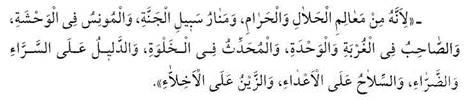
“Since lawful and unlawful can be distinguished through knowledge,
it enlightens the path to paradise, a help at the time of fear and a companion
in loneliness, a company in private, a guide in happiness and sorrows, a weapon
against enemy and an ornament on friends.”
*
 *
*
“God makes some nations superior through knowledge and promotes them
to the extent that He makes them leader so that others will follow them, set
their deeds as examples for them, and seek their advice.”
*
 *
*
“Angels wish to make friends with them, rub their wings on them and
send greetings to them in their prayer.”
*
 *
*
“All creatures on the earth and in the seas seek forgiveness for
them, even fishes, beasts and quadrapeds.”
*
 *
*
“Knowledge enlivens hearts from the death of ignorance, it is the
light of eyes in darkness and strengthens bodies against weakness.”
*
 *
*
“Knowledge makes man to be ranked among the best in the assembly of
the righteous and promotes his rank in the world and the Hereafter.”
*
 *
*
“Occupying one’s thought with knowledge is as keeping fast, and
discussion of knowledge is as keeping vigil in prayer.”
* *
*
“Ties among kinfolk and distinction of God’s lawful and unlawful
through knowledge is servitude to God.”
*
 *
*
“Knowledge is as a leader and practice is its subject.”
*
 *
*
“God inspire knowledge to the fortunate and deprives the wretched
from it.”
*
 *
*
“Therefore happy is the person whom God has not deprived from the blessing
of knowledge.”
Warning: Coordination Between
Knowledge and practice.
Dear reader! May God bless you.
Think of the saying of the Holy Prophet that “Action is subject to
knowledge” and that these two go together and that none of them has any
benefit without the other.
Therefore a scholar has to act according to what he knows.
He should know that knowledge by itself can not lead to success.
The same idea is expressed in the saying of the Holy Prophet (SAW):
*
 *
*
142. “One
whose knowledge increases but his conduct is not improved, does not gain any
benefit from it other than keeping away from God.”
Practice without knowledge does not have any benefit as acknowledge
by the Holy Prophet (SAW):
*
 *
*
143. “One
who acts without discernment, is as one who chooses a by-way instead of the main
path. The
greater pace he takes the farther he will be from the main path.”
Therefore knowledge and practice go together.
None of them can stand on its foot without the other.
Every book written and every speech made revolve round the axis of these
two precious elements.
Heavenly books as well as prophets were sent for the same purpose.
Even heavens and the earth as well as the Verse 12 of the Quranic
Chapter, Talaq, reads:
*
 *
*
“Allah is He who created seven heavens, and of the earth the like of them;
the decree continues to descend among them, that you may know that Allah has
power over all things and that Allah indeed encompasses all things in (His)
knowledge.”
This single verse is sufficient to prove the importance of knowledge
of monotheism.
Verse 56 of the Quranic Chapter, Zariat reads:
*
 *
*
“And I have not created the Jiin and the men except that they should serve
Me.”
This verse too is sufficient to prove the importance of prayer and
devotion. Therefore
man should engage in nothing other than these two, labor for nothing other than
them and be attached to nothing else.
Everything is futile except them.
Now let it be known to you that between these two gems, “the gem of
knowledge” is superior to “the gem of prayer” for the Holy Prophet (SAW)
has said:
*
 *
*
144. “The
virtue of knowledge to God is higher than the virtue of prayer.”
*
 *
*
145. “The
superior of a scholar to a pious man is as the superior of moonlight to stars in
a full-mooned night.”
*
 *
*
146. “O
Ali, the sleep of a scholar (learned man) is better than the prayer of pious
man. O
Ali! Two rak’at prayer performed by a learned man is better than seventy-rak’at
prayer performed by a pious man.”
*
 *
*
147. “O
Ali! When a learned man leans on his bedclothes pondering over his knowledge, it
is better than seventy years of prayer.”
Visiting the face of a learned man or the doorway of his house is the
same as prayer.
It has been reported on the authority of Imam Ali (AS):
*
 *
*
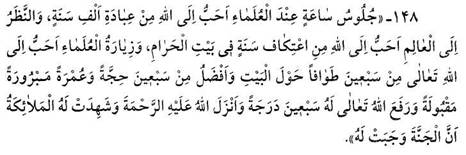
148. “Spending
one hour with the learned men to God is better than one thousand years of
prayer. Visiting
a learned man to God is better than seventy circumambulations of Ka’ba and
better than seventy accepted majjor and minor Hajj.
God promotes the learned man as much as seventy degrees and sends down
Mercy upon him while angels testify that paradise is his due.”
Neverthless, a learned man should not ever be content with his knowledge
nor should he ever fail to worship God, for in that case, his knowledge will go
into waste since knowledge is as a tree and prayer as its fruit.
The value of a tree lies in its fruit or it is good for firewood to be
burnt. Therefore
a believing man must have both of them.
Nevertheless, knowledge is superior, for it is both the basis of action
and as the Quranic verse said, knowledge leads practice (deed) and practice is
subject to knowledge.
This leading role of knowledge puts two duties on your shoulder.
Firstly- You have to recognize God and the One whom you worship, for one
can not worship an unknown God and obey Him.
Logical reasons support this principle.
Secondly-You have to know what your duty is towards God and obey how you
have to obey and worship Him so that you will not do as an act of obedience what
He does not like.
A learned man was asked which was better: knowledge or practice?
He said: knowledge is better for an ignorant person and practice for
learned man. In
addition, you know that knowledge without practice will not only not have any
benefit in the Day of Judgment but it will be a source of trouble for the
learned man.
Have you not heard the Holy Prophet of Islam saying:
*
 *
*
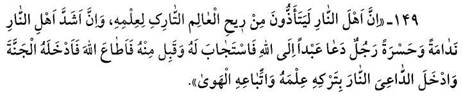
149. “The
inhabitants of Hell are annoyed by the bad smell of a learned man who did not
practice what he had learnt.
The utmost regret among the inhabitants of Hell belong to a person who
invited someone to the way of God and that person accepted it and God made him
enter paradise but he himself entered the Hell since he abandoned what he had
learnt and followed his carnal desire.”
Saeed Ibne Hesham has reported on the authority of Imam Sadeq (AS) as
saying about verse 94 of the Quranic Chapter, the Shuara:
*
 *
*
“So they shall be thrown down into it, they and the erring ones”
*
 *
*
150. “The
erring ones are those who recognized the truth but acted against it.”
The Imam has also said:
*
 *
*
151. “The
most severe punishment is for a learned man who does not benefit from his
knowledge.”
*
 *
*
152. “Learn
whatever you wish but God will give you reward for your deeds not for your
knowledge, for the learned men endeavor to utilize what they have learnt but the
unwise attempt to collect words and quote them.”
In relation to the virtue of knowledge and learned men, there are
many verses and Hadith including verse 18 of the Quranic Chapter, Alay Imran:
*
 *
*
“Allah bears witness that there is no god but He, and (so do) the angels
and those possessed of knowledge.”
And verse 9 of the Quranic chapter, Zumar:
*
 *
*
“Are those who know and those who do not know alike.”
Imam Sadeq (AS) Says:
*
 *
*
153. “When
the Day of Judgment comes, all people are gathered in a land; scales are put for
measuring their deeds.
Then they will measure the blood of martyrs with the pen of the learned
men. In
this measuring, the ink of the learned men’s pen is heavier than the
martyr’s blood.”
In his interpretation of the aforementioned Hadith, a scholar says:
The secret behind that superiority is that the martyr’s blood does not benefit
others after his death but the ink of the learned man’s pen will benefit
others after his death.
Imam Sadeq (AS) has also said:
*
 *
*
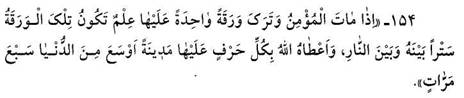
154. “If
a believer leaves behind a sheet of paper on which some knowledge is written,
this very sheet of paper will serve as a wall between him and the Hell and
against each letter written on it, God will give him a city in paradise seven
times this world.”
One must note that by knowledge we do not mean scientific issues
either kept in mind or debated, rather we mean a kind of knowledge which
increases man’s fear of God and creates joy in the deeds which will give us
benefit in the Hereafter and will increase piety.
Imam Moosa (AS) has said:
*
 *
*
155. “The
best knowledge (science) which you should seek is the one without which your
deed will become corrupt and the most worthy knowledge is the one about whose
practice you will be questioned on the Day of Judgment.
The most required knowledge is the one which shows you what is good or
bad for you. The
best knowledge is one which will increase your good deeds.
Therefore, do not ever spend your life on learning something which, if
you don’t know, is not important.
Do not ever remain unaware of the knowledge the abandonment of which will
increase your ignorance.”
If we look at the Holy Quran we will see that this character-building
book describes the learned men as such in verse 28 of the Quranic Chapter, Fater:
*
 *
*
“Those of His servants only who are possessed of knowledge fear
Allah....”
In this verse, God describes learned men as those who fear Allah.
Therefore one who does not fear Allah is not learned.
Verse 9 of the Quranic Chapter, Zomar, says:
*
 *
*
“What ! he who is obedient during hours of the night, prostrating himself
and standing, takes care of the hereafter and those who do not know alike?”
In this verse, learned men have been described with:
-Keeping vigil in prayer
-Performing recommended prayer after mid-night
-Prostrating and bowing
-Having fear and hope
Verse 83 of the Quranic Chapter, the Foods (Maidah) reads:
*
 *
*
“....this is because there are priests and monks among them and because
they do not behave proudly.”
Imam Sadeq (AS) has said:
*
 *
*
156. “Fear
of God is the heritage of knowledge and knowledge is the light of wisdom and the
spirit of faith.
One who does not fear God, is not learned even if he splits an atom, for
God has said: “Those of His servants only who are possessed of knowledge fear
Allah....”
The Holy Prophet (SAW) says:
*
 *
*
157. “Do
not ever sit with any one who calls you to his meeting, for he might change your
faith into doubt, your devotion into hypocrisy, take away humility from you and
make you proud, remove advisability and benevolence, sow the seeds of enmity in
your heart, and finally change your piety into worldly love, rather go to a
learned man who wishes to change your arrogance into humility, your hypocrisy
into devotion, your doubt into faith and your worldly love to piety, and enmity
into benevolence and advisability.”
Jesus (AS) has said:
*
 *
*
158. “The
most wretched person is one who is known for his knowledge and unknown for his
deed.”
Jesus has also said:
*
 *
*
159. “I
visited a tablet with the inscription: Turn me over.
When I turned it over, there was another inscription: One who does not
practice what he has learnt, his knowledge will be to his loss and all he knows
will be used against him.”
God sent the following revelation to prophet David (AS)
*
 *
*
160. “If
a learned man does not practice his knowledge, I will afflict him with seventy
inner punishments and torments the minimum of which is that I will take My sweet
remembrance from his heart.”
It has been reported on the authority of the Holy Prophet (SAW):
*
 *
*
161. “A
knowledge not put into practice is as a treasure not used, that is his possessor
has put himself into trouble in gathering it but he has not gained any benefit
from it.”
It has been reported on the authority of Imam Ali (AS):
*
 *
*
162. “Knowledge
is accompanied with practice, anyone who has knowledge puts it into practice,
and anyone who practices has knowledge.
Knowledge invites its possessor to action with a loud voice.
If he accepts this call, his knowledge will survive but if he rejects
this call, his knowledge will depart.”
In the interpretation of the Quranic verse
*
 *
*
“Those of His servants only who are possessed of knowledge fear
Allah....”, Imam Sadeq (AS) says:
*
 *
*
163. “A
learned man is one whose deeds confirm his speech and one whose speech is not
confirmed by his deeds is not a learned man.”
It has been reported on the authority of the Holy prophet (SAW) that:
*
 *
*
164. “God
sent the following revelation to one of the prophets: Tell those who utilize
knowledge in a way other than religion, and those who learn not for practice but
seek the world instead of the Hereafter, are wolves in sheep’s clothing, their
tongue is sweeter than honey and their deeds are more bitter than Sabr (a bitter
plant): Are you playing trick with Me or mocking Me?
I will afflict you with a calamity the learned men will be surprised
at.”
The Holy Prophet (SAW) has also said:
*
 *
*
165. “One
who has knowledge but does not put his knowledge into practice, is as a touch
giving light to others but exposing himself to fire.”
|
A
Disciple’s Duties Towards His Teacher |
So far a learned man’s duties towards God were discussed.
Now a learned man’s duties towards his teacher are discussed.
Abdullah Ibne Hussain quotes his grandfather (AS) as saying:
*
 *
*
166. “Some
of the teacher’s rights against his disciple are as follows:
-The disciple should not ask his teacher too many questions.
-When someone asks his teacher a question, he (disciple) should not answer it
before the teacher.
-When the teacher rejects something, he should not insist.
-When the teacher is not in a good mood, he should not appeal to him for help.
-He should not indicate his teacher with finger.
-He should not look at his teacher from the corner of his eyes.
-He should not speak or consult with others in the presence of his teacher.
-He should not say to his teacher: Someone has said the opposite of what you
say.
-He should not disclose his teacher’s secret.
-He should not backbite in his teacher’s presence.
-He should support his teacher both in his presence or absence.
-He should warmly greet his teacher.
-He should sit politely in front of his teacher.
-He should take lead in meeting the requirements of his teacher.
-He should not be annoyed by his teacher’s long lecture, for teacher is as a
palm tree and one should
wait for it to give its fruit.
-The learned man is as one who keeps fast, keeps vigil in prayer and fights in
the way of God. When
a learned man passes away, a gap will be created in Islam which will not be
filled until the Day of judgment.
The seeker of knowledge will be accompanied by seventy thousand
angels.”
Ibne Abbas has been quoted as saying: “Tolerate the humility of seeking
knowledge so that you will become honorable later and others will respect
you.”
A sage has said: “One who does not tolerate apprenticeship during
childhood, will remain in his ignorance for ever.”
The Holy Prophet (SAW) has said:
*
 *
*
167. “Flattery
is not the quality of a believer save in seeking knowledge.”
Kinds
of knowledge (Science)
Imam Sadeq (AS) has said:
*
 *
*
168. “I
found out all human knowledge having four qualities:
First-Knowing God.
Second-Knowing what He has done with you.
Third-Knowing what He expects you.
Fourth-Knowing what keeps you away from your religion.
Imam Sadeq (AS) has also said:
*
 *
*
169. “God
did not send any messenger save taking from him three pledges: Confession to
obedience, renouncing polytheism, and admitting that everything is in the Hand
of God, thus He will perish or preserve whatever He wills.”
|
The
Etiquette of Business |
Having comprehended the value of “knowledge and pratice”, we should
know that there is no benefit in any other than these two precious gems, for the
rest are either necessities of life or something extra.
We have to discuss these two in order to make them clear.
First-Necessities of life
Seeking necessities of life is not a sin rather it is considered as a
prayer, the Holy Prophet of Islam has said:
*
 *
*
170. “One
who labors for the livelihood of his family is as a fighter in the way of
God.”
Imam Ali (AS) has said:
*
 *
*
171. “Do
deal-May God give you blessings-for I have head from the Holy Prophet (SAW) as
saying: sustenance has ten parts, nine of it is deal and one part is in other
things.”
*
 *
*
172. “The
biggest sin of a man is to let his family’s right go to waste.”
The Holy Prophet (SAW) has said:
*
 *
*
173. “Accursed
is one who lets his family’s rights go to waste.”
One should note that certain rules must be observed:
First, one should go after Halal (lawful) and shun Haram (unlawful) and
doubtful business, for engaging in a business which is neither Halal nor Haram
will make man to engage in Haram.
The Holy Prophet (SAW) has said:
*
 *
*
174. “One
who does not care how he earns his livelihood, God does not care from which way
he will be thrown into Hell either.”
Secondly, one should be content with what he earns.
For instance, if he can work all day long for one Dinar, but he knows
that his expense is one third of Dinar, he should work a third of the day and
spent the rest in prayer.
Saving expenses for a year is permissible but more than that is not
good.
Sheikh Sadooq has reported on the authority of the Holy Prophet (SAW):
*
 *
*
175. “One
who is in good health, is secure and has the expenses of a day and night, has
the whole world with him: O son of Ja-sham, the expenses necessary are first:
the food which removes your hunger, and secondly the clothes which cover your
body. If
you possess a house it is good and if a riding vehicle is added to them, that
would be excellent.
But if they are not available, a simple food is sufficient, for if it is
more than that, you are either answerable for it or exposed to punishment.”
Thirdly, he should renounce avarice which is blameworthy, for it leads to
the commitment of erroneous deeds and sometimes unlawful ones.
One must know that the subsistence of God’s servant has been divided.
Hence neither avarice increases it nor contentment decreases it.
It has been reported on the authority of the Infallibles (AS):
*
 *
*
176. “Useless
effort and avarice will not increase lawful sustenance and God’s grant.”
The Holy Prophet (SAW) in the farewell Hajj said:
*
 *
*
177. “O
people! I informed you about what brings you to paradise and keeps you away from
Hell, and encouraged you about those deeds.
I also bewared you of what brings you to Hell and keeps you away from
paradise. Know
that Gabriel inspired into my heart that: No one dies but he has fully received
his sustenance.
Therefore avoid being worldly.
Do not ever seek your sustenance through unlawful way if it is delayed.
Surely God has divided lawful and not unlawful sustenance among people.
One Who has forbearance and observes piety, will receive lawful
sustenance. And
one who is impudent, hasty and earns his livelihood in an unlawful way, will
have sustenance decreased to the same extent and he will be questioned too on
the Day of Judgment.
One day the Holy Prophet (SAW) said to one of his companions:
*
 *
*
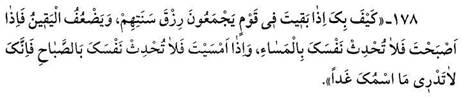
178. “How
do you feel if you live long enough to see a nation who saves the expenses of
one year but their belief in God and Ressurrection is weak?
Do not ever grief in the morning for night nor grief in night for the
morning when you don’t know whether you will be alive or dead tomorrow?”
So far we have discussed livelihood.
As for expenses, we should say that you have to observe moderation as
well as economization in relation to what you earn.
DO not ever be extravagant, for God in verse 27 of the Quranic chapter,
the Israelites (Bani Israel), says:
*
 *
*
“Surely the squanderers are the fellows of the shaitans.”
The Holy Prophet (SAW) says:
*
 *
*
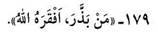
179. “One
who is extravagant will be made destitute by God.”
The Holy Prophet (SAW) also says:
*
 *
*
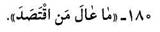
180. “One
who is moderate will never become destitute.”
One has the following duties against one’s dependents:
1- Against
oneself
One must avoid overeating, for the Holy Prophet (SAW) has said:
*
 *
*
181. “For
the children of Adam, a few morsels which can keep him alive are sufficient.
So when he needs food, let him devote one third of his stomach to food,
one third to drinks and the last third to breathing.”
The Holy Prophet (SAW) has said:
*
 *
*
182. “In
the Day of Judgment only those people starve who are the most gluttonous in this
world.”
Gluttony has the following pests:
-It will cause hard-heartedness.
-It keeps body from worship.
-It keeps man from keeping vigil in prayer.
-It keeps man from recommended prayer after midnight.
Those who are gluttonous are found in dirty places but those with a light
stomach are found in mosques.
2-
Against family
One must observe moderation and not be strict to them, rather he
should be lenient to them and whenever he gives a promise, he has to keep it to
make his family happy.
It has been reported on the authority of Imam Moosa (AS):
*
 *
*
183. “Whenever
you give a promise to children, keep it, for they think you are the giver of
sustenance and God does not become so wrathful against men as he does because of
unfair treatment of women and children.”
A
praiseworthy tradition is that man should buy fruits for his family especially
on Friday about which Imam Ali (AS) has said:
*
 *
*
184.
“Come home to your family members with fruits every Friday night so
that they will become happy about Friday.”
3- Against parents
*
 *
*
185.
“The best deeds are: Prayer in its proper time, respecting one’s
parents and fighting in the way of God.”
*
 *
*
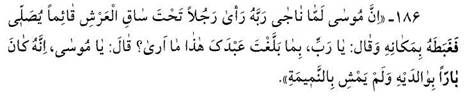
186.
“When prophet Moses (AS) was invoking God, he saw a man praying under
the Throne of God.
Moses (AS) envied him saying: O God! How have you promoted this man to
such position?
God said: This man had two virtues, first he did good to his parents and
secondly he was not a talebearer.”
*
 *
*
187.
“Is one of your parents still living?”
He
said: Yes, my father.
The
Holy Prophet said:
*
 *
*
“Go
and do good to him.”
When
the man returned, the Holy Prophet said:
*
 *
*
"Had
he a mother, it would be better.”
*
 *
*
188.
“One who wishes to have a long life and have his sustenance increased,
must do good to his parents, for taking care of them is considered as a
prayer.”
*
 *
*
189.
“Keep on doing it, for this deed of yours will serve as a shield
against fire of Hell.”
*
 *
*
190.
“What keeps you from doing good to your living or dead parents?
Perform prayer, keep fast, and give charity on their behalf, for it will
benefit both you and them.
God too will reward you for your good deeds.”
|
Parents-Children
Rights Against Each Other |
Now
that we have come to this topic, it would be proper to discuss some of the
children-parents duties against each other as well as the quality of their
relations.
A
child should never call his parents by their first names.
He should not walk ahead of them or sit before they do.
A person went to the Holy Prophet (SAW) and said: What is the right of my
child? The Holy Prophet (SAW) said:
*
 *
*
191.
“Choose a good name for him.
Teach him good manners, and prepare him for a bright future.”
*
 *
*
192.
“A good child is a source of happiness for man.”
*
 *
*
193.
“A child for his father is as a flower sent by God, with good smell.
Surely Hassan and Hussein are my flower whom I have named after two
tribes of Bani Israel, Shabr and Shubair.”
Fazl
Ibne abi Qareh ha reported on the authority of Imam Sadeq (AS) :
*
 *
*
194.
“The Holy Prophet (SAW) has said: Once Jesus (AS) passed by the grave
of a man who was in torment.
The following year when Jesus passed by the same grave, he noticed that
the torment had been removed.
He said: O Lord! last year when I was passing by the grave of this man,
he was in torment but he is not now! God said: A good child has been left of him
who guides people and gives refuge to orphans.
For this reason, I have forgiven him his sins.”
Imam
Sadeq (AS) quoting Prophet Zakaria in verses 4-6 of the Quranic Chapter, Mary
says:
*
 *
*
“.....Therefore
grant me from thyself an heir, who should inherit me and inherit from the
children of Yaqoub, and make him, my Lord, one in whom thou art well pleased.”
*
 *
*
195.
“Whoever has four sons but does not name one of them after me has
treated me unkindly.”
Suleiman
Ja-afari says: I heard Imam Kazem (AS) saying:
 *
*
196.
“Destitution never enters a house in which there are the names of
Mohammad, Ahmad, Ali, Hassan, Hussein, Taleb, Abdullah, or Fatima (among women).
*
 *
*
197.
“Whenever Satan hears someone calling Mohammad or Ali, he will be
melted as lead.”
*
 *
*
198.
“Whenever a son is born into our family, we name him “Mohammad” for
a week. After
that, we can change the name or keep it.”
Imam
Reza (AS) has also said:
*
 *
*
199.
“Choose good names for your children, for on the Day of Judgment, you
will be called with the same names, saying: O such and such person rise up to
your light! O such and such person, rise up! You have no light.”
*
 *
*
200.
“When your wife has gone pregnant for four months, place her in the
direction of Qiblah, give a gentle blow to her side and say: O God! I have named
him Mohammad. In
that case God will make him a son.
If you keep this name, God will give him blessing and if he changes the
name, God may take or leave him.”
*
 *
*
201.
“Should anyone having a baby on the way intends to name him Mohammad or
Ali, God will give him a baby boy.”
*
 *
*
202.
“Praise is due to Allah who did not given me a deformed child.”
*
 *
*
203.
“A man who sees his successive child before his death, is lucky.
Then he said: God has shown to me my successor.
The Imam was referring to his son.
Imam Reza.”
*
 *
*
204.
“God will send blessing upon a father who has a great love of his
children.”
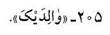
205.
“To your parents.”
He said: They have passed away.
The Imam said:
*
 *
*
“Treat
your children fairly.”
Imam
Sadeq (AS) has also said:
*
 *
*
206.
“Love the children and have mercy on them and whenever you give them
promise, keep it, for they consider you as provider of food.”
*
 *
*
207.
“Whoever kisses his child, it will be a virtue for him.
Whoever makes his child happy, God will make him happy on the Day of
Judgment. And
whoever teaches his son the Holy Quran, parents are called to give them two
garments from whose light, the face of the inhabitants of paradise will become
bright.”
*
 *
*
208.
“This man, in our opinion, is an inhabitant of Fire.”
*
 *
*
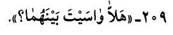
209.
“Why don’t you observe equity between them?”
*
 *
*
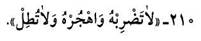
210.
“Don’t beat him rather don’t speak to him for some time but let it
not be too long.”
*
 *
*
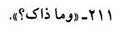
211.
“What is wrong with it?”
*
 *
*
“Didn’t
you hear the moaning of the child?”
*
 *
*
“I
feared that the child’s father might be preoccupied with him.”
|
The
Blessings of Having Daughters |
Imam
Sadeq (AS) has said:
*
 *
*
212.
“Surely Prophet Ibrahim (AS) called on God to give him a daughter to
weep after his death.”
*
 *
*
213.
“What good offsprings are the girls! For they are kind, obedient,
sympathetic and having blessing with them.”
*
 *
*
215.
“Whoever curses his child, God will afflict him with poverty.”
*
 *
*
216.
“Girls are as benefaction but boys are as riches.
On the Day of Judgment, there will be reward for the benefaction but
riches will be questioned of.”
*
 *
*
217.
“Whoever has three daughters or three sons, paradise is his due.”
“The
same is true with two.”
It was asked: O Messenger of Allah, how about one?
The Holy Prophet said:
“The
same is true with one.”
*  *
*
218.
“Whoever has three daughters or sisters and is patient in taking care
of them until they get married or die he and me are as these two fingers on
paradise - at this time, the Holy Prophet referred to his index and middle
fingers.”
“The
same is true with two.”
It was asked, how about one?
The
Holy Prophet said:
*
 *
*
219.
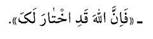
“What will you do if God says to you: Shall I choose.
The Imam said:
 *
*
“Now
God has chosen a girl for you.
*
 *
*
“So
we desired that their Lord might give them in his place one better than him in
purity and nearer to having compassion.”
4-
Kinsfolk
*
 *
*
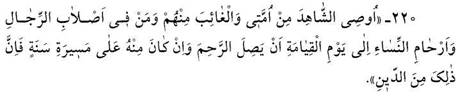
220.
“I recommend ties of kinship to those who are present or absent and
every one of my Ummah being in the loins of men and wombs of women till the Day
of Judgment even if there is a gap as long as a year between them, for ties of
kindship is part of religion.”
*
 *
*
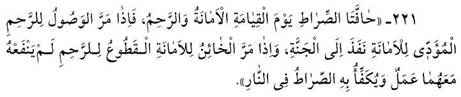
221.
“One side of Sarat (bridge which the righteous only can cross on the
road to paradise) on the Day of Judgment is trustworthiness and the other is
ties of kinsfolk.
One who has been trustworthy and has observed ties of kinsfolk, crosses
the bridge and goes to paradise, however, one who breaches the trust and is
heedless of relatives can not cross the bridge, for his other deeds will not
avail him and Sarat will throw him into fire.”
|
Rights
of wife |
The
Holy Prophet (SAW) has said:
*
 *
*
222. “Gabriel
perpetually recommended about women’s rights so much so that I thought
divorcing them was not permissible in cases they commit a flagrant indecency.”
The Holy Prophet (SAW) also has said:
*  *
*
223. “Fear
Allah in relation to two weak groups: Women and orphans.”
The Holy Prophet (SAW) has further said:
*
 *
*
224. “Wife’s
rights against her husband is that he should provide her with food and clothes
and not find fault with her.
When he discharges these duties, I swear by God, he has paid her due.”
--------
So far we have discussed the etiquette of business as well as expenditure the
gist of which was economization and moderation.
This is a general principle as recommended by Islam.
Omar Ibne Aziz quoting Imam Sadeq (AS) says:
*
 *
*
225. “When
I invoke God for something, I ask Him to give me the power of working and
earning lawful income.
God in verse 10 of the Quranic Chapter, the Jummah says”:
*
 *
*
“But when the prayer is ended, then disperse abroad in the land and seek of
Allah’s grace.”
*
 *
*
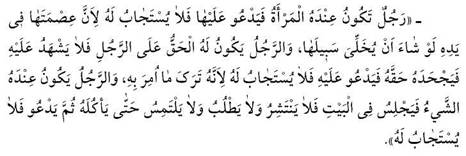
“If a person enters a room, closes up the door with mud and then says: My
sustenance will come, he is among three groups whose Du will not be
fulfilled.”
The narrator says: I asked Imam Sadeq (AS): Who are those three
groups? The
Imam (AS) said:
*
 *
*
“A man who has a wife but curses her.
This curse will not be actualized, for he has option to divorce her.
Also a man who has a claim against someone but he has not taken anyone as
witness and the debtor denies it too.
If the creditor invokes God to curse the debtor, his Du will not be
fulfilled, for God has ordered to take witness when you lend money whereas he
has not taken heed of God’s order.
And finally, a person who has a wealth but sits at home doing nothing
until he spends all his wealth and then invokes God to give him sustenance.
This Dua will not be fulfilled either.”
What we have discussed is the duty of common people but god’s special
servants are classified into two groups: The first group are those who are bound
with business and the second group are those who rely on God.
To distinguish between these two groups, we will discuss reliance on and remembrance
of God as well as those who truly rely on Him.
|
The
Virtue of Relying on God |
Relying on God is the state of the righteous ones, that is those who have
ridded themselves of bonds.
In that case the clouds of sorrows will give their place to those of
security. They
feast themselves with contentment and drink from the springs of tranquility.
In verse 3 of the Quranic Chapter the Talaq, God says:
*
 *
*
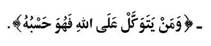
“...and whoever trust in Allah, He is sufficient for him.”
Also in verse 173-174 of the Quranic chapter, Alay Imran, God says:
*
 *
*
“Those to whom the people said: Surely men have gathered against you,
therefore fear them, but this increased their faith, and they said: Allah is
sufficient for us and most excellent is the protector.
So they returned with favor from Allah and (His) grace; no evil touched
them...”
In the Old Testament, we read:
*
 *
*
226. “O
son of Adam! Is it difficult for Me who created you first from dust and then
from sperm to give you a loaf of bread?”
God sent the following revelation to Jesus (AS):
*
 *
*
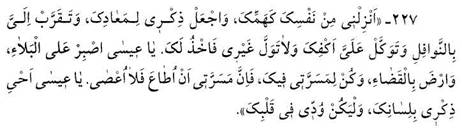
227. “My
attention to you is as much as your endeavor.
Remember Me for the Returning Day.
Come near to Me with recommended prayers and praiseworthy acts.
Put your trust in Me so that I will suffice you.
Do not ever put your trust in anyone other than Me, for you will be taken
to task. O
Jesus! Be patient in afflictions and content with God’s will.
Try to make Me happy, for My happiness is in obedience and abandonment of
sins. O
Jesus! Revive My remembrance with your tongue and keep My love in your heart.”
Imam Sadeq (AS) has said:
*
 *
*
228. “Whoever
is worried about sustenance, a sin will be written for him.”
A Hadith says:
229. Prophet
Daniel (AS) was living at the time of an oppressing king who arrested and threw
him into a well.
The king threw some fierce animals into the well too but the animals did
not approach Daniel nor did they hurt him.
At this time, God revealed to another prophet to take food for Daniel.
That prophet asked: O God! where is Daniel then? God said: Leave this
place. A
hyena will come to you.
Follow it and it will take you to him.
That prophet did so and reached the well.
He sent down the food.
When Daniel saw the food before him, he said:
*
 *
*
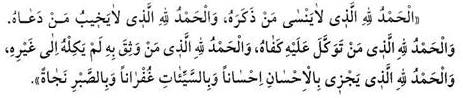
Praise is due to Allah who does not forget one who remembers Him.
Praise is due to Allah who does not disappoint the supplicant.
Praise is due to Allah who is sufficient for one who trusts in Him.
Praise is due to Allah and whoever relies on Him, needs no other
reliance. Praise
is due to Allah who rewards good with good, forgives sins and rewards patience
with deliverance.
Imam Sadeq (AS) has said:
*
 *
*
230. “God
gives the pious men sustenance from a place they do not think of and He does not
accept the presence of His favorite servants in tyrant’s ruling apparatus.”
One of the revelations sent to prophet David(AS) was the following:
*
 *
*
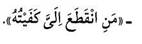
“Whoever stops having hope in anyone but Me, I will be sufficient for
him.”
It has been reported on the authority of Imam Sadeq (AS):
*
 *
*
231. “Gabriel
came to the Holy Prophet (SAW) and said: O Messenger of Allah! God has sent you
a gift which He has not given to anyone before.
The Holy Prophet said: What is that gift?
Gabriel said: It is patience.
*
 *
*
“But there is a virtue better than patience.
The Holy Prophet said:
What is it?
Gabriel said: It is contentment.
*
 *
*
“There is still a virtue better than contentment.
The Holy Prophet said: what is it?
Gabriel said: It is pleasure of God.
*
 *
*
“But there is a virtue better than that.
The Holy Prophet said: What is it?
Gabriel said: It is piety.”
*
 *
*
“Yet there is a virtue better than that.
The Holy Prophet said: What is it?
Gabriel said: It is devotion.”
*
 *
*
“But there is a virtue better than that.
The Holy Prophet said: What is it?
Gabriel said: Sure knowledge.”
*
 *
*
“Yet there is a virtue better than that.
The Holy Prophet said: What is it?
Gabriel said: The way to attain all of them is to put trust in God.
*
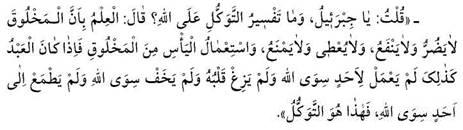 *
*
“I said O Gabriel! What is the meaning of putting trust in God?
Gabriel said: Knowing that His creatures neither harm nor benefit anyone.
They neither give nor withhold anything.
One must stop having hope in creatures. When a man reaches this position,
he will not do anything save for Him, his heart does not go astray, he fears no
one save Him and he does not set his hope on anyone but Him.
This is the meaning of putting trust in God.
*
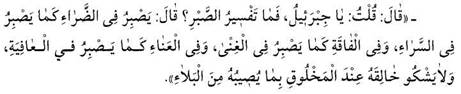 *
*
“The Holy Prophet said: O Gabriel! What is the meaning of patience?
Gabriel said: Man must have forbearance and patience in afflictions as in
joys. He
should never complain of His Creator to the people.
*
 *
*
I said: What is the meaning of contentment?
Gabriel said: To be content with whatever in this world and to thank God
for the small things he has.”
*
 *
*
“The Holy Prophet said: what is the meaning of God’s pleasure?
Gabriel said: To be pleased with God but not to be pleased with one’s
own deeds.
*
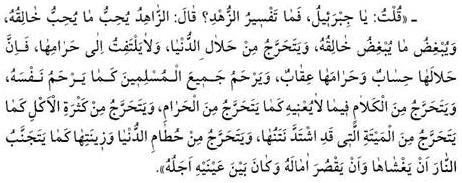 *
*
“The Holy Prophet said: O Gabriel!
What is the meaning of piety.
Gabriel said: A pious ;man loves whatever His creator loves and hates
whatever He hates.
He is careful about what is lawful and leaves of what is unlawful, for
what is lawful is counted and what is unlawful will entail punishment.
He has mercy on every muslim as he has on himself.
He shuns useless words as he shuns what is unlawful.
He abstains from overeating as he keeps away from a corpse with bad
smell. He
keeps away from the embellishments of world as he keeps away from Fire.
His desires are not far-fetched and death is present before his eyes.”
*
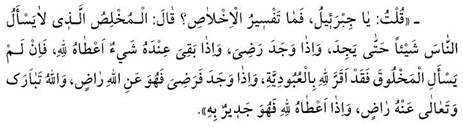 *
*
“The Holy Prophet said: O Gabriel! What is the meaning of Devotion?
Gabriel said: A devoted person is one who does not ask for anything from
people until he obtains it and whenever he obtained it, he is pleased with it.
Also if he has something extra, he will give it away for the sake of God.
The fact that he does not ask for something from others is admittance of
his being a servant of God.
He is pleased with God and God is pleased with him.
He gives away when he needs it more than others.”
*
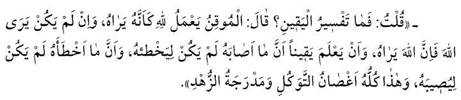 *
*
“The Holy Prophet (SAW) said: What is sure knowledge?
Gabriel said:
A man of sure knowledge acts in a way as if he sees God.
Even if he does not reach the degree of seeing God, he knows that God
sees him and is sure that what he has and what he has not is what God wills.
These were some of signs of putting trust in God and having piety.”
A Hadith says when Imam Sadeq (AS) who had come to Kufah for some
time was leaving that city, a group of people who had left the city to see off
the Imam in a certain point, saw a lion on their way.
Ibrahim Adham who was among them said: Wait for the Imam to come.
They did so.
When the Imam reached them, they told him about the lion.
The Imam approached the lion so much so that he tool the lion by ear and
drove it off the road and said:
*
 *
*
232. “Should
people worship God as He deserves, they can carry loads on lion.”
Jovayrieh Ibne Moshar has reported: Imam Ali (AS) and I were going
towards Kufah with no one else with us.
On our way, we reached a salt marsh where we came across a male lion
sitting on the ground.
The female lion and the cubs were behind him.
I pulled the reins of my horse to withdraw.
At this moment the Imam said:
233. “O
Jovayrieh! Go ahead, this animal is a dog to God, as other animals whose control
is in the hands of God.
No one but He can ward off the evil of this animal.”
I saw that lion, wagging his taile, came to Imam Ali (AS).
The Imam rubbed his foot against the lion’s face.
At this point, God with His Omnipotence made the lion speak, saying:
Peace be upon you O Amiralmoamenin and the successor of the Holy Prophet!
The Imam said: Peace be upon you lion too! How do you praise God?
The lion said: Glory be to My Lord! He is free from all defects.
Glory be to the One who has placed my awe in the hearts of His servants!
Glory be to Him! Glory be to Him!
Imam Ali (AS) passed by that place while I was accompanying him.
The salt marsh was vast hence the afternoon prayer was being missed.
I was worried about the afternoon prayer, saying to myself:
Woe to you O Jovayrieh! Are you interested in prayer more than
Ameeralmoamenin when you saw the adventure of lion with your own eyes?
We rode on together until the salt marsh was behind us.
The Imam descended from the horse.
then he recited Adhan and Eqamah, whispered something and made an
indication with his hand.
At this time, with God’s absolute power, the sun returned to its former
position in afternoon. We
performed the afternoon prayer together.
After prayer, I raised my head and saw that the sun had returned to its
former position all at once, and the stars had appeared.
Imam Ali once again recited Adhan and Eqamah, performed the evening
prayer, mounted the horse, turned to me and said:
-O Jovayrieh! Do you think I am an enchanter?
Do you say I have never seen this sunrise and sunset?
Is it magic or visual error?
Soon I will drive Satan’s temptations from your heart.
Don’t you know that in verse 180 of the Quranic Chapter, the Araf, God
says:
*
 *
*
-And Allah’s are the best names, therefore call on Him thereby.”
-O Jovayrieh! One day when the Holy Prophet was receiving revelation and
his head rested on my lap, the sun set while I had not performed the afternoon
prayer. The
Holy Prophet asked me: Have you performed the afternoon prayer.
The Holy Prophet said: No.
The Holy Prophet said: O God, Ali was in a stage of worship, meeting the
need of Your Messenger.
Then the Holy Prophet called God by His Chief Name.
All of a sudden the sun returned from its position and I performed my
prayer with tranquillity.
The sun set after sometime.
Then the Holy Prophet - may my parents be sacrificed for him - taught me
that name. I
too recited the Du with the same name.
O Jovayrieh! Truth in the hearts of believers is more clear than
Satan’s suggestions.
I called on God to remove those suggestions from your heart.
What do you see now?
I said:
My master! Those suggestions are removed from my heart.
On the Censure of Asking Something from
Others
Imam Sadeq (AS) has said:
“If a man does not ask anything from others, his devotion to God will be
proved.”
This suggests the weak belief of a man who asks something from others and
the strong belief of a man who has set his hope on God, for when he gives up
reliance on anyone but God he no longer sets his hope on them.
As the result, his belief in God and his servitude will become pure and
perfect. In
this relation, verse 106, of the Quranic Chapter, Yusuf, says:
*
 *
*
-”And most of them do not believe in Allah without associating others (with
Him).”
*
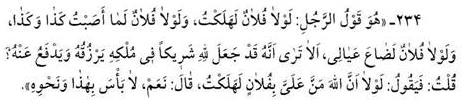 *
*
234. “This
associating others with God is the words of people who say: If it was not for
the sake of such and such person, I would be miserable.
Or if it was not the help of such and such person, I would not have this
position or my family would be afflicted.
Don’t you see that such people have associated others with God in His
rule and that those associates give sustenance to these people and expel the
loss from them.
The narrator relates: I said: How about saying: If God had not made me
indebted through such and such a person, I would have been afflicted?
The Imam said: Yes, there is no harm in these kinds of words.”
Imam Sadeq (AS) has also said:
*
 *
*
235. “Our
followers are those who do not ask anything from others though they are
starving.”
It is for this reason that the testimony of a beggar is not accepted.
The Holy Prophet (SAW) has said:
*
 *
*
236. “The
testimony of one who begs is not accepted.”
It is related that Imam Zeinal Aabedeen (AS) saw people on the day of
Arafah expressing need before people.
The Imam said:
*
 *
*
237. “These
are the worst people, for all people appeal to God but these people appeal to
people.”
Imam Sadeq (AS) has said:
*
 *
*
238. “If
a beggar knows what heavy burden his request has, no one will ever ask anything
from others. And
if the person from whom something is asked knows what heavy burden the act of
withholding has, he will never reject any beggar’s request.”
Imam Sadeq (AS) has also said:
*
 *
*
239. “one
who begs something but is not needy, is eating fire.”
Imam Baqer (AS) has said:
*
 *
*
240. “By
God, it is true that anyone who opens the door of begging to himself, God will
open the door of poverty to him.”
Imam Zeinal Aabedeen (AS) has said:
*
 *
*
241. “I
stand guarantor on behalf of God for one who begs others only in the days of bad
need.”
One day the Holy Prophet (SAW) said to his companions:
*
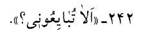 *
*
242. “Do
you pledge allegiance with me?”
They said: O Messenger of Allah! We pledge allegiance with you.
The Holy Prophet said:
*
 *
*
“Pledge
allegiance with me that you will not ask anything from people.”
After that day, whenever a person dropped something he himself would
bend and take it up and did not ask anyone to give it to him.
The Holy Prophet (SAW) also said:
*
 *
*
243. “If
any one of you takes a rope carrying fire wood with it to earn his livelihood,
it would be better than asking for something from others.”
Imam Sadeq (AS) has said:
244. One
of the companions of the Holy Prophet became destitute.
His wife said: Go to the Prophet and ask him to help.
The man came to the Holy Prophet (SAW) who said:
*
 *
*
“Whoever asks for something from us, we will meet his needs but who does
not express his need, God will meet his need.”
That man said to himself: I am sure the Holy Prophet (SAW) meant me.
Then he went back to his wife and told her everything.
The man’s wife said: The Messenger of Allah is a human being like
others. Go
and tell him about your plight. The man came to the Holy Prophet once again.
When the Holy Prophet (SAW) saw him, he said the same to the man.
This was repeated for three times and the man who heard these words from
the Holy Prophet went away and borrowed an axe and set out for the mountain.
He went up the mountain gathering some firewood.
He brought the firewood to the city and bartered it for some flour.
The next day, the man went to mountain.
But this time he brought more firewood and sold them.
He did so for several days till he bought an axe.
After sometime, he bought two camels and a slave and he was well off.
Then he came to the Holy Prophet and told the prophet about everything.
The Holy Prophet said: I told you that whoever asks something from us, we
will meet his need but one who does not express his need, God will meet his
need.
Imam Baqer (AS) said:
*
 *
*
245. “Expressing
one’s needs to people will destroy one’s honor and losing hope in what is in
the hands of people will create dignity for believers.
Avarice is the same as destitution.”
It has been reported on the authority of the Holy Prophet (SAW):
*
 *
*
246. “One
who does not express his needs, will be made rich by God and whoever seeks
chastity, God will make him chaste.
Whoever invokes God for something, God will give it to him.
Whoever opens the door of begging, God will open seventy doors of poverty
which nothing can close.”
It is related that a beggar asked for something from the Holy Prophet
through God. The
Holy Prophet ordered to give him five lashes, saying:
*
 *
*
247. “Make
people swear by your mean face not by the face of God.”
One the Censure of Rejecting the Beggar
The Holy Prophet(SAW) has said:
*
 *
*
248. “Do
not reject the request of the beggar, for were it not for the beggar’s lying,
the rejectors would become miserable.”
*
 *
*
249. “Either
give small thing to the beggar or make him go away with mercy and soft words,
for, on many occasions, one who is neither human nor jinn will come to you to
see what you do with God’s blessings.”
A person reports: I was sitting at the door of Imam Sadeq’s house when a
beggar came by and asked for something.
But relatives rejected him.
Imam Sadeq (AS) reproached them much, saying:
*
 *
*
250. “Did
you reject the first beggar who came to us?
Give food to as many as three beggars and then you have the option of
giving food or more than three, for you have performed your duty.”
Imam Sadeq (AS) has also said:
*
 *
*
251. “Give
something to the first, second and third beggar.
You have the option if it is more.”
It has been reported on the authority of the Holy Prophet (SAW):
*
 *
*
252. “Whenever
a beggar knocks at the door at night and asks for something, do not ever reject
him.”
*
 *
*
253. “We
will give away even to those who are not entitled to help lest we will reject
those entitled to it.”
|
Some
of the Etiquettes of Charity |
Imam Ali Ibne Hussein (AS) has said:
*
 *
*
254. “Charity
during night extinguishes God’s wrath.”
The Imam said to Abi Hamzah:
*
 *
*
255. “If
you wish God to make you die cleansed, and to forgive you your sins when meeting
Him, do good, give charity secretly and observe ties of kinship, for, these
three acts, make you live long, remove poverty, and ward off seventy kinds of
bad deaths.”
The Holy Prophet (SAW) was asked: which charity is the best?
The Holy Prophet (SAW) said:
*
 *
*
256. “Charity
to kinsfolk who hide their enmity from you.”
Imam Sadeq (AS) was asked: To whom should we give charity, to the
beggar or needy relatives?
The Imam said:
*
 *
*
257. “Give
charity to relatives, for it has greater reward.”
It has been reported on the authority of Imam Baqer (AS):
*
 *
*
258. “If
you wish to give charity one day before Friday, leave it off for Friday.”
*
 *
*
259. “Whoever
quenches the thirst of another man, God will quench his thirst from intact
wine.”
Imam Sadeq (AS) has said:
*
 *
*
260. “The
best kind of charity is to quench thirst.
Whoever quenches the thirst of others whether human or quadraped, on the
Day of Judgment when there is no shades save His shade He will set a shade for
him.”
Extras of life
This extra is a heavy burden on the shoulder of man, for what is unlawful
in this world will entail punishment and what is lawful is being reckoned.
Abdul Ibne Omar says: I heard the Holy Prophet (SAW) saying:
*
 *
*
261.
“My ummah are classified into three groups”:
*
 *
*
“The first group are those who do not like to amass wealth; they do
not attempt to gain much wealth nor hoard it; they are content with what keeps
them alive and what covers their nakedness.
Whatever ensures their Hereafter is sufficient for them.
This group are secure and there is no fear for them.”
*
 *
*
“The
second group are those who wish to obtain wealth in a legal way so as to look
into the affairs of their relative; do good to their brethren, and help the
poor. For
them, it is easier to eat stone than to gain a Dirham illegally or not to give
it to someone who is entitled to it until the day of death and save it.
If any argument is made against them on the Day of Judgment, they will be
punished, and if forgiven, they will be secure.”
*
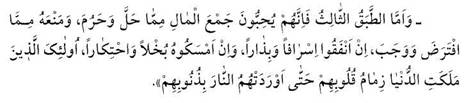 *
*
“The third group like to amass wealth; lawful and unlawful wealth
are indifferent to them; they abandon what is obligatory and are extravagant;
even when they do not spent, it is out of envy and hoarding; these are people
the reins of whose hearts are in the hands of the world so as to enter Hell as a
result of their sins.”
The Holy Prophet (SAW) has said:
*
 *
*
262. “No
one is allowed to gain wealth illegally and to give it as charity and to be
rewarded. If
he spends of that wealth, it has no blessings for him and if the wealth survives
him, it will put him in Fire.”
Imam Ali (AS) being asked about the worst kind of wretchedness, said:
*
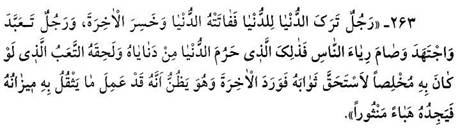 *
*
263. “Whoever
abandons the world for the sake of world, he has lost both the world and is a
loser in the Hereafter.
Whoever performs prayer and keeps fast in order to be seen by people he
is deprived of world and only labor is left for him, but if he had devotion in
it, he was entitled to reward.
Such a person enters the scene of the Day of Judgment while he thinks he
has with deeds which add to his good deeds whereas he finds it gone with the
wind.”
Imam Ali (AS) being asked to whom belongs the utmost degree of
regret, said:
*
 *
*
“One
who sees his wealth in the scales of others while he enters Hell because of
unlawful wealth and his heirs will enter paradise because of the charity they
have given.”
Asked how is this possible, Imam Ali (AS) said:
*
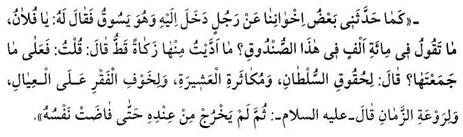 *
*
“A brother told me the following story: I went to see a man who was
giving up the ghost.
He said to me: I have a hundred thousand Dirhams in this coffer the alms
of which I have not given.
What shall I do with it?
I said: What have you amassed it for?
He said to pay the tax levied by king, to puff before relatives, for fear
of poverty and for a rainy day.
The Imam said: The man had hardly left the house when he died.”
Then the Imam (AS) said:
*
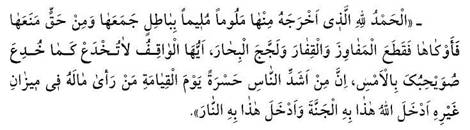 *
*
“Praise is due to Allah who took him from this world with reproach
while he amassed the wealth illegally and had withheld the right of one who was
entitled to it, he had tied up the purse too, the wealth for the amassing of
which he had traversed deserts, cities and seas.
O you who dwell in this world! do not ever be deceived as that man was
deceived yesterday.
Surely the worst regret on the Day of Judgment belongs to one who sees
that his wealth is in the scales of other. they have gone to paradise but he
himself will go to Hell for the sake of his wealth.”
Imam Sadeq (AS) has said:
*
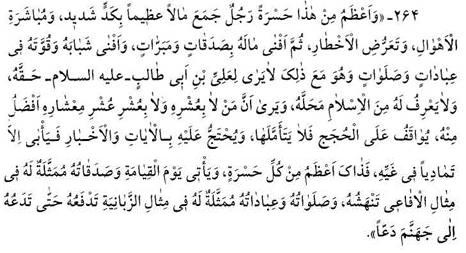 *
*
264. “More
regretful than that man is one who has amassed a huge wealth with labor but he
has ruined it with alms and charitable deeds, has spent his youth and power in
prayers but has considered no right for Ali Ibne Abitaleb (AS), has not deemed a
position for him in Islam and has considered as superior those who were inferior
to him in rank, who never ponder on the Imams and whenever they reasoned with
the Quranic Verses or Hadiths, he would not accept, because he had gone astray.
This person has the maximum regret.
He enters the scene of the Day of Judgment while his charitable deeds
have taken the shape of vipers biting him, and his prayers taking the shape of
the angels, of Hell driving him to Hell.”
*
 *
*
“He will say:
Woe to me, was I not among the worshippers?
Was I not among alms-givers?
Was I not one who had no covetous eye on the wealth of people and their
women? Why
then I have been so much afflicted?
*
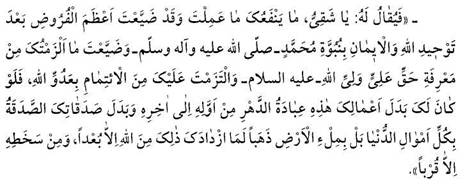 *
*
“He is said: O wretched one! Your deed will not benefit you,
for you have ruined the greatest divine doctrine after belief in god and
prophethood. You
have not recognized the friend of Allah, Ali Ibne Abi Taleb (AS) as he deserved
and you have given in to the enemy of God instead.
If you had prayed from the beginning of the world to the end of
it, if you had spent all the wealth of the world instead of these deeds, you
would not have gained anything save becoming more aloof from God and getting
nearer to His wrath.”
It has been reported on the authority of the Holy Prophet (SAW):
265.
Avoid too much wealth, for in the past a man had amassed a great fortune
for his children.
When the angel of death appeared at his house disguised as a poor man and
knocking at the door, the doormen opened the door.
The angel of death said: Tell your master to come out, I have some
business with them.
They said: Shall our master come to a person like you?
With this answer they kept the man from the door.
The angel of death came with the same appearance once again saying:
Tell your master to come out and inform him that I am death angel.
Hearing this, the master of the house was overwhelmed with fear.
At this time he sat down and said to his doormen: Speak to him softly and
say; May God bless you, perhaps you are looking for someone else.
The angel of death said: No and entering the house, he said to the master
of house: make your will, for I have to take your life soon.
At this moment, the family members started weeping.
The man rose up and had all the coffers of gold and silver opened and
listed and then turned to the coffers swearing at them saying; May God curse
you! It was you who made me forget God.
You made me to be negligent of the Hereafter until they have given the
news of my death.
At this time God made his wealth speak saying: Why do you swear at me?
You are to blame! You were mean in the eyes of people! It was me who
raised your position.
Was it not you who were present at royal courts and although there were
qualified person there but they would let you in before others?
Was it not you who proposed the girls of wealthy people along with pious
men but they would accept only you?
Had you spent me on charitable deeds, could I have prevented you?
Had you spent me for the cause of Allah, you would never had your wealth
decreased. Now
that you are in such a state you are swearing at me while you yourself are to
blame! We both have been created from dust.
I returned to that dust but you go to the sins you have committed through
me.
Then the angel of death said: Wealth speaks to its master in this way!
|
The
Sinister Result of Amassing Wealth |
You should know that one who attempts to amass wealth is loser and unwise.
This can be proved with the following reasons:
1-
He has wronged himself for spending all his life seeking it, for if such
a man is among people, he is preoccupied by his wealth and if he is alone, he
cannot have a comfortable sleep for the fear of thief.
A learned man used to say: The poor have three characteristics: They have
sure knowledge about God being the only provider of food, they have peace of
mind, and their deeds are easily reckoned on the Day of Judgment.
The
wealthy too have three characteristics: The labor they have tolerated in seeking
wealth, their mind being preoccupied with wealth, and a hard reckoning.
2- They
have this preoccupation as to what they should do with their wealth and how to
have it increased, how to keep it from thieves and how to use them?
This group are in such a state until their death comes up all of a sudden
ruining their dreams and leaving the heavy burden of wealth on their shoulders.
Prophet Jesus (AS) has said:
*
 *
*
266. “Woe
to the worldly man! The way he dies and leaves the world, he thought he was safe
but the world deluded him.
He trusted the world but the world abased him.”
3- Amassing
wealth generates far-fetched desires, darkens heart and drives the sweetness of
prayer out of heart which is the worst kind of wretchedness in human being.
Prophet Jesus (AS) says:
*
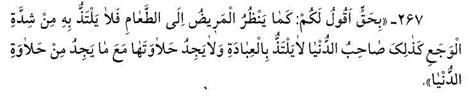 *
*
267. “I
truly say to you: As a sick person has a desire for food but because of his
being sick does not enjoy it, the worldly man will not enjoy his prayer as long
as the world tastes sweet to him, hence he cannot benefit from the sweetness of
prayer.”
*
 *
*
“And I truly say to you, in the same way that if you do not get on a
horse for sometime and leave it for itself, it will be difficult to ride on it
afterwards, for the animal has become weak, if human hearts are not soften by
remembering death and prayer, they will become hard.”
*
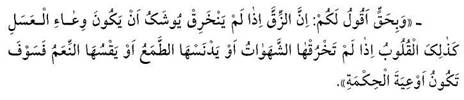 *
*
“And I truly say to you if waterskin is not torn, it might be used
as honey container.
In the same way, if human hearts are not torn by lusts or polluted by
avarice, or they are not hardened by too many blessings, they can become good
receivers of wisdom.”
4- One
who amasses wealth, not only will not attain his aim but he will attain the
opposite, for the aim of endeavor is peace of mind but amassing of wealth
generates sorrows and troubles so much so that he will escape from wealth as one
escapes from snakes and fierce dogs.
A learned man says: A poor man lives in ease for three things but the
wealthy man is afflicted with them.
They said: what are those three things.
He said; The rulers’ tyranny, neighbours’ envy, and brothers’
flattery. Commenting
on this topic, Amiralmomenin (AS) says:
*
 *
*
268. “Destitution
is better than neighbours’ envy, rulers’ tyranny and relatives’
flattery.”
A poet says: One who amasses wealth in the world and treasures it but
is not fearful of its fate is as a silkworm which thinks its cocoon will help it
but the same will cause its death.
5-
One who amasses wealth, has purchased the world for his life whereas life
is the most precious asset both for the world and the Hereafter, for if a wise
man is asked to sell his life for the world, he will certainly not accept,
rather he is ready to give all his wealth for an additional day in his life when
meeting the angel of death.
Some of Heavenly Blessings
Have you not heard the Holy Prophet (SAW) as saying:
*
 *
*
269. “Whoever
says: “sobhanallah” (Glory be to God), God will plant ten trees for him in
paradise having all kinds of fruit.”
These fruits taste pleasant and are of various kinds.
It has been related that when one eats fill of date, it will turn into
grape, and when one eats fill of grape, it will turn into fig and pomegranate,
that is to say, the fruits of these trees change with the choice of man.
The Holy Prophet (SAW) says:
*
 *
*
270. “If
a garment of those inhabiting paradise is sent for the people in world, their
eyes have not the power of looking at it and they will die out of the pleasure
of looking at it..”
When the description of garment is such, imagine the state of one who
wears it. Imam
Ali (AS) conveys the same meaning when he says:
*
 *
*
271. “If
the eyes of your heart see the heavenly blessings described, you will rush to
join the deceased, that too with eagerness.”
When attention to the description of heavenly blessings is so
beneficial, how good will be to see those blessings themselves.
It has been reported on the authority of the Infallibles (AS):
*
 *
*
272. “Whatever
is in this world is better to hear of than to see and whatever is in the
Hereafter is better to see than to hear of.”
In verse 20 of the Quranic chapter, the Man (Insan), God says:
*
 *
*
“And when you see that good site, you shall see blessings and a great
kingdom.”
In the Old Testament, it has been pointed out:
*
 *
*
273. “I
have prepared for My servants what no eyes have seen, no ears have heard and no
hearts have felt.”
Dear readers if you are interested in these blessings, you must
renounce the world, for renouncing the world is a provision for the Hereafter.
The world and the Hereafter are as two rival wives.
The more you make one of them content, the more the other one becomes
discontent. Or
they are as east and west.
The more you approach one, the farther you will be from the other.
In this relation Imam Sadeq (AS) has said:
*
 *
*
274. “We
human beings love the world.
But it is better the world is not given to us, for nothing was ever given
to the sons of Adam unless something was not reduced from the benefit of
hereafter.”
One must note that what is meant by “we human beings love the
world” refers to humanbeings love the world” refers to humankind and not the
Holy Prophet and his pure children(AS), for their dignity is above these
descriptions. How
is it possible when Gabriel come to the Holy Prophet three times offering the
key to paradise to him and saying:
*
 *
*
275. “These
are the keys to the world treasures.
If you accept them, your position with your Lord will not be diminished
even a bit.”
Yet the Holy Prophet (SAW) refused to take them and he did not
overvalue what God had undervalued.
The world you purchase for this great blessing is not but a moment, for,
you can neither find its fromer pleasures nor its agonies and hardships.
The failure has not come either.
Therefore the world and its pleasures are only a moment.
It is for this reason that addressing Salman, the persian, Imam Ali (AS)
has said:
 *
*
276. Let
not this world be your ambition, for it will be certainly separated from you.”
In addition, we realize that no one has sold the Hereafter for this
world unless he has lost both.
Addressing the world, God says:
*
 *
*
277. “Serve
one who serves Me and trouble one who is your servant.”
If you are busy with something, take the opportunity to remember God
and fill your book of deeds with virtues.
It is reported that whenever our Master, Ameeralmoamenin (AS) was free
from war, he was engaged in teaching people, judging among them and when he was
free from them, he started working in his own garden while remembering
God.
Hakam Ibne Marwan reports on the authority of Jobair Ibne Habib that a
problem had come up for Omar who could not solve.
He turned to Mohajereen saying: What is your opinion?
They
said: O Ameeralmomenin! You are the authority! Are you asking us?
Omar
was embarrassed and said:
*
 *
*
“O
you who believe! He careful of Allah and speak the right word.”
By
God both you and I know who can solve this problem.
They
said: You mean Ali Ibne Abi Talib?
He
said: Why didn’t people refer to him for solving their problem and came to me?
Has any woman ever given birth to a son like him?
They
said: Send for him.
Omar
sighed and said: He is a great man of Bani Hashem tribe, a close associate of
the Holy Prophet (SAW) and the extention of his knowledge.
Go and bring him here.
People rushed to the imam and found him busy hoeing in a garden while
reciting verses 36-38 of the Quranic Chapter, the Resurrection,:
*
 *
*
“Does
man think that he is to be left to wander without an aim?
Was he not a small seed in the seminal elements, then he was a clot of
blood, so He created (him) then made (him) perfect.”
 *
*
278.
“O Omar, lower your voice”, then recited verse 17 of the Quranic
Chapter, the Great Event,:
*
 *
*
“Surely
the day of decision is a day appointed.”
A
poet says: “The world offered a high price of the world and whatever it has.
Nevertheless, the world purchased my life free.
May perdition overtake the two hands of a dealer the selling partner of
which suffered loss.”
It
has been reported on the authority of the Holy Prophet (SAW):
*
 *
*
279.
“On the Day of Resurrection, twenty four treasures, that is, as many as
the hours of day and night are opened to the servants of God against every day
of life. They
open a treasure and he will find it replete with light and joy for its owner.
seeing it, he will feel so happy that if they divide that happiness among
the inhabitants of Hell, they will be amazed and will not feel the agony of the
Fire. These
treasures are those hours he has worshipped God.”
*
 *
*
“Then
they will open another treasure.
He finds it dark, rotten, and horrifying.
Seeing it, he will cry so much that if ht e fear is divided among the
inhabitants of paradise, its blessings will become unpleasant for them.
This treasure is the hours in which he has committed sins.”
*
 *
*
“Then
they open the third treasure.
He will find it empty.
It will make him neither sad nor happy.
This is the hours in which he has slept or been engaged in permissible
acts. Here
he will regret as to why he lost such moments while he could replete it with
good deeds beyond imagination.”
*
 *
*
“Verse
9 of the Quranic chapter, Loss and Gain (Taghabun), conveys same meaning:
“That is the day of loss.”
|
The
Positive Result of Poverty (contentment) |
Do not ever let Satan’s temptation affect you and say
through your tongue; I will benefit from what is permissible and Godly
blessings, perform what is obligatory, discharge what is right, and as God says,
in verse 32 of the Quranic chapter, the Elevated places (Araf):
*
 *
*
“Say: Who has prohibited the embellishment of Allah which He has
brought forth His servants and the good provisions?”
1- One
who goes after luxury and is absorbed in it, can not keep away from the
blameworthy vice of avarice and will be certainly led into error which will
certainly ruin him.
2- Given
that he is safe from avarice, how can he escape from hard heartedness and
arrogance while in verse 6-7 of the Quranic Chapter, the Clot (Alaq), God says:
*
 *
*
The Holy Prophet (SAW) has said:
*
 *
*
280.
“Keep you away from extra food, for it will leave the stain of
hardheartedness on your heart.”
281.
“ A poor man came to the Holy Prophet (SAW) near whom a wealthy man was
sitting. As
soon as the poor man entered, the wealthy man shrank from him.
The Holy Prophet (SAW) said to him: What happened that you moved back
from this man?
Did you fear that his poverty might get to you or your wealth to get to
him,
The
wealthy man said; Now that you said so, I will give half of my wealth to this
man. The
Holy Prophet turned to the poor man and said: Do you accept it from him?
He said: No!
The Holy Prophet said: Why? The Poor man said: I am afraid of becoming
like him.”
*
 *
*
282.
“In the Gospel we read: Prophet Jesus (AS) said to God: O God! give me
loaf of oat bread in morning and one in the evening.
Do not give me more for it might make me disobey You.”
3-
4-
On departing from the world, a wealthy man regrets.
But on the contrary, a poor man becomes happy.
It has been reported on the authority of Imam Sadeq (AS):
*
 *
*
283.
“The more a person is engaged in world, the more he will regret at the
time of death.”
5-
Imam
Ali (AS) has said:
*
 *
*
284.
“Make your burden light to join the convoy, for the dead are awaiting
the living ones.”
*
 *
*
285.
“Let your simple way of living be as light as the load of an animal.”
Aboozar
said to the Holy Prophet (SAW): O Messenger of Allah, will those who fear God,
are humble and remember God frequently, go to paradise before others?
The Holy Prophet (SAW)
said:
*
 *
*
286.
“No, rather the poor believers put their feet on the necks of
people on the necks of people on the Day of Judgment.
At this time, the guards of paradise say to them: Stand where you are so
that your deeds will be reckoned.
They say: What for?
By God, we had nothing for which to be unjust.
God did not give us anything to give away or not to give away.
We kept on serving God until our death came.”
*
 *
*
287.
“The poor believers enter paradise forty autumns before the wealthy
ones do.”
*
 *
*
“I
tell a parable for you: It is the parable of two ships which an inspector
visits. One
is empty and when the inspector visits it, he says: Let it go but inspecting the
other, he finds it full.
Here he will say: Stop this one.”
*
 *
*
288.
“On the Day of Judgment, two believers who are entitled to paradise,
are brought for reckoning.
One is poor and the other is wealthy.
The poor believer says: O God! Why should I stop here?
By Your Glory! You know well that You did not give me authority to be
just. You
did not give me wealth to give alms.
My sustenance, according to Your will, was sufficient, God says; My
servant is right, open the way for him to enter paradise.
But
He keeps the other one waiting until sweat shed by him can quench the thirst of
forty camels. It
is only then that he will enter paradise.
There, the poor believer says to him;
What
kept you behind?
He will say: Reckoning was long.
A question was being raised and God would forgive it.
Then other questions were asked and God would forgive it.
Then other questions were asked and God extended His Mercy to me and made
me join those who repent.
But now tell me and made me join those who repent.
But now tell me who you are?
The other one says; I am the poor believer who was with you before.
Then the wealthy believer says: The heavenly blessings have completely
changed you.”
6-
The needy believer is respected and favored by God on the Day of
Judgment. In
this relation Imam Sadeq (AS) says:
*
 *
*
289.
“In the same way that a brother makes an apology to a brother, God too,
on the Day of Judgment, makes apology to a needy believer and will say: By My
Glory! I did not make you poor to abase you.
Remove the curtain and see what I have given you in exchange?
This believer looks at what God has given him instead and will say: O
God! I have not lost anything in this deal.”
7-
*
 *
*
290.
“Whenever you see poverty is coming to you, say: Bravo to the motto of
the righteous ones.
And when you see wealth is coming to you, say: It is a sin whose
punishment has been hastened.”
|
The
Lifestyle of Prophets and Imams (AS) |
A
glance at the lifestyle of prophets and Imams will give us extremely beneficial
lessons to follow.
1.
Prophet Moses (AS)
*
 *
*
“My
Lord! Surely I stand in need of whatever good Thou mayest send down to me.”
291.
“One day Prophet Moses said: O God! I am hungry.
God said: I know you are hungry.
Moses said: O God! Send me a food.
God said: I will whenever I wish.”
*
 *
*
292.
“O Moses! Poor is one who has no guardian like Me.
Sick is one who has no healer like Me.
Lonely is one who has no friend like Me.
O Moses, be content with a piece of bread which removes your hunger and a
cloak by which you cover yourself.
Be patient in afflictions.
When you see a fortune is coming to you, say: Surely we are of God and
unto Him do we return, this is the punishment reaching us in the world in
advance. And
if you see the world has turned its back to you, say: Bravo to the motto of the
righteous.
The
everlasting saying of the spirit of God (Jesus) was:
*
 *
*
293.
“My two hands are my servant, my two feet are horse, the earth is my
carpet, the stone is my pillow.
What gives me warmth in the winter is the lands on which the sun has
shone. Moonlight
is my lantern at night.
Hunger is the main course of my food.
Fear of God is my garment, and those herbs growing on the earth for quadrupeds and wild animals are my fruits and basil.
Days
become night and nights become days while I do not own anything.
Nevertheless, there is no one more wealthy than I am.”
3.
Prophet Noah (AS)
Noah
was the most aged prophet.
He lived as long as 2500 years.
Nevertheless he did not build himself a house in world.
When dawn would came, he would say:
*
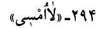 *
*
294.
“I will not survive the night.” and when night came, he would say:
*
 *
*
“I will not survive the morning.”
Of
course, the Holy Prophet (SAW) was such too, that is to say, he did not put a
brick on a brick.
Seeing one of his companions build a house with gatch and brick, the Holy
Prophet said to him:
*
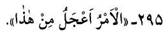 *
*
295.
Death will come before this house is ruined.”
Prophet
Ibrahim, the father of all prophets wore woolen clothes and ate oat as food.
5. Prophet Yahya (John), son of Zakaria (AS)
The
clothes of Prophet Yahya (AS) was made of date fibre while leaves of tree were
his food.
6. Prophet Solomon (AS)
Although
prophet Solomon had an extraordinary power and rule, his garments were made of
wool. He
would fasten his hands to his neck at night and kept on standing on his feet
while shedding tear till dawn for fear of God.
He earned his living by weaving basket with his own hands.
Every
one knows what the Holy Prophet ate ant wore.
It is reported that one day when he felt very hungry, he put a piece of
stone on his stomach, and said:
*
 *
*
296.
“There are many persons who respect themselves but have actually
offended themselves and there are persons who have offended themselves but have
actually respected themselves.”
*
 *
*
“
There are many people who are hungry and bare in this world but enjoy comforts of life
in the Hereafter and there are many people who live in pleasure in this world
but are hungry and bare in the Hereafter. .”
*
 *
*
“There
are many people who fully enjoy God’s blessings with His Messenger but there
will be no benefit for them in the Hereafter.”
*
 *
*
“Be
aware that the deeds of inhabitants of paradise are firm as mountains but the
deeds of the inhabitants of Hell are as soft as soil.”
*
 *
*
“Most
often short-lived lusts cause long sorrows on the Day of Judgment.”
Imam
Ali ‘s (AS) lifestyle is too clear to be discussed here.
Sovaid
Ibne Ghofleh says: When people pledged allegiance with Imam Ali to become a
caliph, I went to the Imam who was sitting on a small mat while there was
nothing else in his room.
I said: O Amiralmomenin! Now the public fund is in your hand and you have
nothing at home, why don’t you meet your needs by withdrawing from public
fund? The
Imam said:
*
 *
*
297.
“O son of Ghofleh! A wise man never fills with many fitting a house
from which he must depart.
For us, there is a haven to which we have sent the best goods and we will
soon go there.”
*
 *
*
298.
“Cut off one of the sleeves to be used for some other purpose.”
*
 *
*
“In
this sleeve, I will carry something for Hassan and Hussein from bazaar.”
*
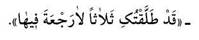 *
*
“I
have divorced you three times so that there will be no recourse.”
*
 *
*
299.
“Nothing will serve God better than piety in this world.”
*
 *
*
300.
“Be content with small portion of the world together with your safe
faith in the same way that the worldly people are content with a small portion
of faith and a safe world.
Make friendly relations with God by keeping away from the worldly people
and seeking divine pleasure by making them displeased.”
*
 *
*
According
to the Quranic stories, the deniers of God and His religions were normally the
wealthy ones.
*
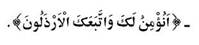 *
*
“Shall
we believe in you while the meanest follow you?”
(Verse 111 of the Quranic Chapter, Shuara)
They
also said:
*
 *
*
“We
do not see any have followed you but these who are the meanest of us....”
*
 *
*
“Surely
we see you to be weak among us, and were it not for your family we would surely
stone you, and you are not mighty against us.”
*
 *
*
“Do
you know that Salih is sent by his Lord?
They said: Surely we are believers in what he has been sent with.
Those who were haughty said: Surely we are deniers of what you believe
in.”
The
children of prophet Jacob (Yaghoob) said:
*
 *
*
“.....and
we have brought scanty money, so give us full measure and be charitable to us;
surely Allah rewards the charitable.”
(Verse 88 of the Quranic Chapter, Yusuf)
While
finding fault with prophet Moses (AS) and priding himself, Pharaoh said:
*
 *
*
“But
why have not brace of Gold been put upon him?”
(Verse 53 of the Quranic Chapter, Zukhruf)
Addressing
the Holy Prophet (SAW) the polytheists used to say:
*
 *
*
“Why
has not a treasure been sent down upon him or an angel come with him?”
(Verse 12 of the Quranic Chapter, Hud)
*
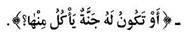 *
*
“Or
(why is not) a treasure sent down to him, or he is made to have a garden from
which he should eat.”
(Verse 8 of the Quranic chapter, the Criterion)
 *
*
“Or
you should have a garden of palms and grapes in the midst of which you should
cause rivers to flow forth, gushing out.”
(Verse 91 of the Quranic Chapter, the Israaelites)
*
 *
*
“Why
was not this Quran revealed to a man of importance in the two towns.”
The
two Towns are Mecca and Taif and men of importance of these two towns were
either Moghaireh of Walid Ibne Habib Ibne Amre Saghafi from Taif.
These two men were chiefs of their tribes and had a lot of wealth in
Mecca and Taif.
The
aforementioned verses in favor of those lacking wealth are sufficient.
How are these verses not sufficient when addressing Jesus (AS) God says:
*
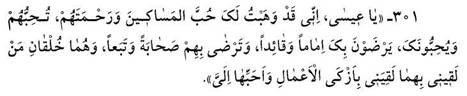 *
*
301.
“O Jesus, I have given to you as a gift the love of the poor, the
destitute, and mercy on them.
You love them and they love you.
They are content with your leadership and you are content with helping
them and their following you.
If a person meets Me with these two virtues, he has met me with the most
pure and praiseworthy deeds.”
*
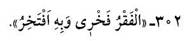 *
*
302.
“Being in need of God is a source of pride for me and I take pride in
it.”
*
 *
*
303.
“I truly say to you that heavens are devoid of the wealthy.
It is easier for a camel to enter the eye of a needle than a wealthy man
to enter paradise.”
*
 *
*
304.
I was informed in paradise that most of its inhabitants are the needy, a
few of the wealthy people and some women.”
*
 *
*
305.
“Do you know that I have not had any food for several days and I am
hungry. I
know that you yourself are hungry too.
So why you have not left anything from all that money?”
*
 *
*
306.
“I had pity on those who might fall into humiliation as a result of
begging, hence, I did not bring home anything.”
1.
After recitation of the Holy Quran.
2.
Between Azan and Eqamah.
3.
When heart is broken.
4.
When tears are running.
Abu
Basir has reported on the authority of Imam Sadeq (AS):
*
 *
*
307.
“Recite Dua when your heart is broken, for no heart is ever broken
unless it has already been purified.”
|
Dua under Special circumstances |
a-
During war
b-
During Major Hajj pilgrimage
c-
During Minor Hajj pilgrimage
d-
During illness
Isa
Ibne Abdullah reports on the authority of Imam Sadeq (AS)
*
 *
*
308.
“Three persons’ Dua is answered: First: One who performs major and
minor Hajj. Second:
One who fights in the way of Allah.
Third: An ill person.
Do not ever challenge him nor make him feel sad.”
e-
An ill persons’ Dua for visitor.
Ranks
and Reward of an Ill Person
*
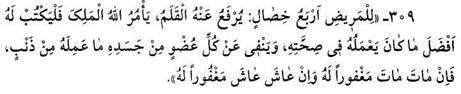 *
*
309.
“An ill person has four characteristics:
1-
Sin is not written for him.
2-
God orders the angel to write for him the best of deeds he would do when
he was in good health.
3-
Every sin he has committed with body organs will be forgiven.
4-
He will be forgiven whether he dies or survives.
*
 *
*
“When
a muslim becomes ill, God will write for him the best deeds he would do when he
was in good health and his sins would fall off like the leaves of a tree.”
*
 *
*
“Whoever
visits an ill person, should the ill person recite a Du for him, it will be
fulfilled.”
*
 *
*
“God
will send the following revelation to the angel on the left side: Do not write
anything for my servant as long as he is under My shelter.
God will say to the angel on the right side:
Write
a virtue for the moaning of My servant.”
*
 *
*
“Illness
cleanses body from sins in the same way that a black smiths’ bellows removes
dust from iron.”
*
 *
*
“A
child getting sick is atonement for his parents’ sins.”
It
is reported on the authority of Imam Sadeq (AS):
*
 *
*
310.
“The Messenger of Allah said: Fever is a sign of death and God’s
prison on the earth.
Its warmth is form the Hell and this much of warmth is a believer’s
share of Fire.”
*
 *
*
“What
a good pain is fever, for it gives a share of affliction to every body organ and
one who is not afflicted with tribulation has not any share.”
*
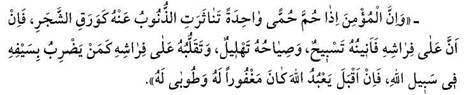 *
*
“When
a believer is suddenly affected with fever, his sins fall off like the leaves of
a tree. If
he laments in his bed, his lamentations are as Sobhanallah (Glory be to Allah)
and his cry is laelahaellallah (There is no God but Allah), his moving in bed is
as if he is fighting for the cause of Allah.
If he lives on and serves God, he will be forgiven.
Happy is such a person!”
*
 *
*
“One-day
fever is atonement for one year of sin and its agony will body for the same
period. This
agony is atonement for the past and future.”
*
 *
*
“One
who laments for a night but does not complain or rather thanks God for it, the
same will serve as atonement for two years; one year for accepting the pain and
one year for forbearing it.”
*
 *
*
“Illness
for a believer is as purification and mercy but for the unbeliever it is
punishment and curse.”
*
 *
*
“Illness
persists in believer till his sins cleansed.
A headache of one night will remove all sins except the cardinal ones.”
*
 *
*
311.
“If a believer knows what great reward afflictions have, he wishes to
be cut into pieces with scissors.”
*
 *
*
312.
“Should a believer walk in the straight path and become ill, go on a
trip or is not able to perform his duties as he used to, God will write for him
the same virtue for the deeds of normal days.”
*
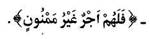 *
*
“So
they shall have a reward never to be cut off.”
(Verse 6 of the Quranic Chapter, Teen)
*
 *
*
313.
“When a believer dies, the two guardian angels will ascend to heavens
saying: O God! You took the life of such and such person.
God will say: Go down and perform prayer at his graveside and say
Laelahaellallah.
Then write these deeds for him.”
Jaber
reports that a man who was both dumb and deaf came to the Holy Prophet (SAW)
making gesture with his hand.
The Holy Prophet (SAW) said:
*
 *
*
314.
“Give him a piece of paper to write what he wants.”
*
 *
*
“I
bear witness that there is no god but Allah and I bear witness that Mohammad
(SAW) is the Messenger of Allah.”
At
this point, the Holy Prophet (SAW) said:
*
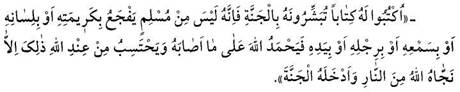 *
*
“Write
for him something and give him the good tidings of paradise, for, whenever a
muslim loses his tongue, his ears, his arms or legs but he is thankful for that
affliction and invokes God to give him reward, God will save him from Fire and
make him enter paradise.”
Then the Holy Prophet (SAW) said:
*
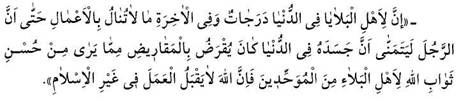 *
*
“People
of afflictions have ranks in the world and positions in the Hereafter which no
one can attain with righteous deeds so much so that he wishes his body would be
cut into pieces with scissors.
This desire arises when these people watch the reward given to the
afflicted believers by God on the Day of Judgment, for God does not accept any
deed without man’s submission to Him.”
f-
During Fast
*
 *
*
315.
“The sleep of one who fasts is as prayer,
his silence is as glorification of God, his deeds are accepted and his Dua
is answered.”
*
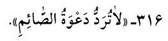 *
*
316.
“The Dua of one who fasts is not rejected.”
*
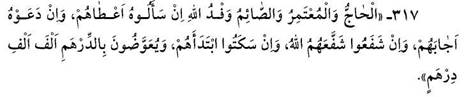 *
*
317.
“One who performs major and minor Hajj as well as one who keeps fast
are God’s vicegerents.
If they invoke God, they will be given, if they recite a Du, it will be
fulfilled, if they intercede for others, their intercession will be accepted by
God. If
they keep silent, God will speak to them, and will give them a million Dirhams
for one Dirham given for the cause of God.”
g- Whoever recites
Dua for forty brothers in faith, and name them.
h- Whoever is wearing a ring with turquoise or agate on it.
It
has been reported on the authority of Imam Sadeq (AS):
*
 *
*
318.
“The Messenger of Allah said: God says: a servant who raises his hands
towards Me while wearing a ring with turquoise, I will be ashamed of returning
him disappointed.”
*
 *
*
319.
“There is no hand more beloved than one wearing a ring with agate
raised towards God.”
|
What
Kind of Ring To Wear |
It
has been reported on the authority of Imam Reza (AS):
*
 *
*
320.
“Whoever wears a ring with an agate on it, firstly he will not become
needy and secondly, what God has destined for him, will be good.”
*
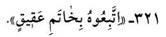 *
*
321.
“Give him a ring with agate.”
The associates did so.
They realized that man was never harmed in his life.
Imam Reza (AS) said:
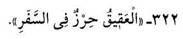 *
*
322.
“Having agate with you in trip, will safeguard you.”
*
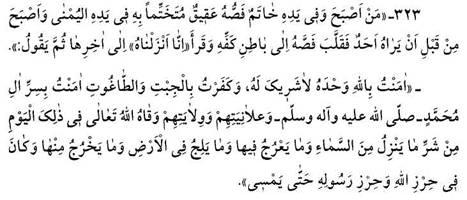 *
*
323.
“Whoever wears a ring with agate in his right hand, if
he reverts the agate toward the palm of his hand in the morning before
any one sees him, and recites the Quranic Chapter, Qadr and then say: I believe
in Allah who has no partner, and deny other god, but I believe in what is hidden
from and manifest to the progeny of Mohammad (SAW) and I believe in their
leadership, God will keep him safe on that day from the earthly and heavenly
evils and keep him under His own protection and keep him under His own
protection till night.”
*
 *
*
324.
“Wear a ring with agate so that God will give you blessings and you
will be safe from evils.”
*
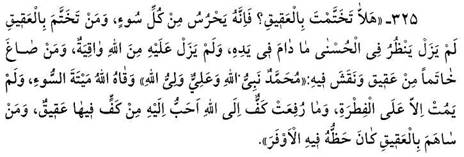 *
*
325.
“Why weren’t you wearing a ring with agate?
This ring will safeguard man from all evil.
Whoever wears a ring with agate will end up in god as long as he is
wearing that ring and God will protect him forever.
Whoever makes a ring with agate and the inscription: Mohammad, Messanger
of Allah and Ali, friend of Allah, God will keep him from bad death and he will
die a believer.
No hand raised towards Allah is more beloved than a hand wearing a ring
of agate. Should a man wearing a ring of agate draw lots, he will have a
lion’s share.”
*
 *
*
326.
“By Myself, I will not punish with Fire a hand wearing a ring of agate
provided he believes in the leadership of Ali.”
*
 *
*
327.
“Performing two Rak’at of prayer with a ring of agate is equal to a
thousand Rak’at with
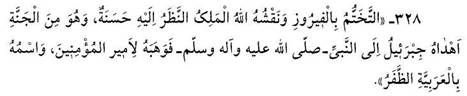 *
*
328.
“It is good to look at a ring with turquoise on which there is
inscription, Allah is the King.
Turquoise originally comes from paradise and Gabriel brought it for the
Messenger of Allah
as a gift and the Holy Prophet too gave it to Amiralmomenin as a gift.
In Arabic it is called Zofr.”
*
 *
*
329.
“Wear a ring of black and white, for, it reverts Satan’s tricks.”
*
 *
*
330.
“Wearing a ring set with emerald will ease affairs and entails no
hardship. A
ring set with agate remove poverty.”
*
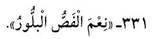 *
*
331.
“A ring set with crystal is good.”